
Reviewed · REYKJAVIK TOURS
Reykjavik: 45-Minute Volcano Sightseeing Helicopter Tour
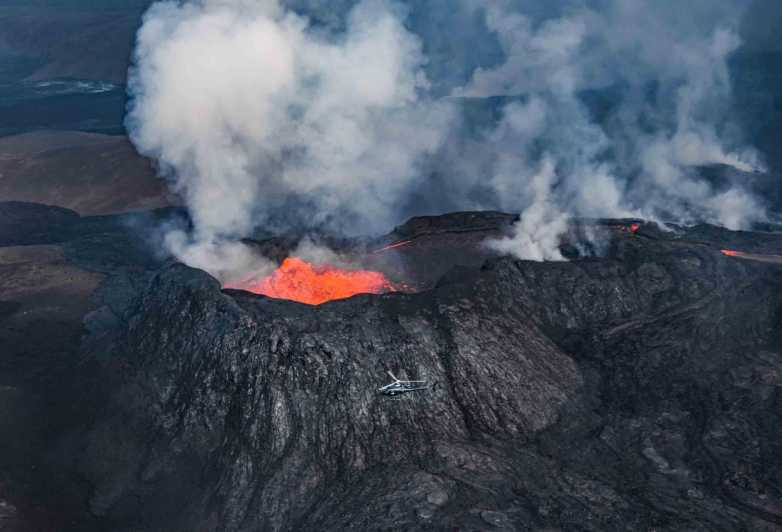
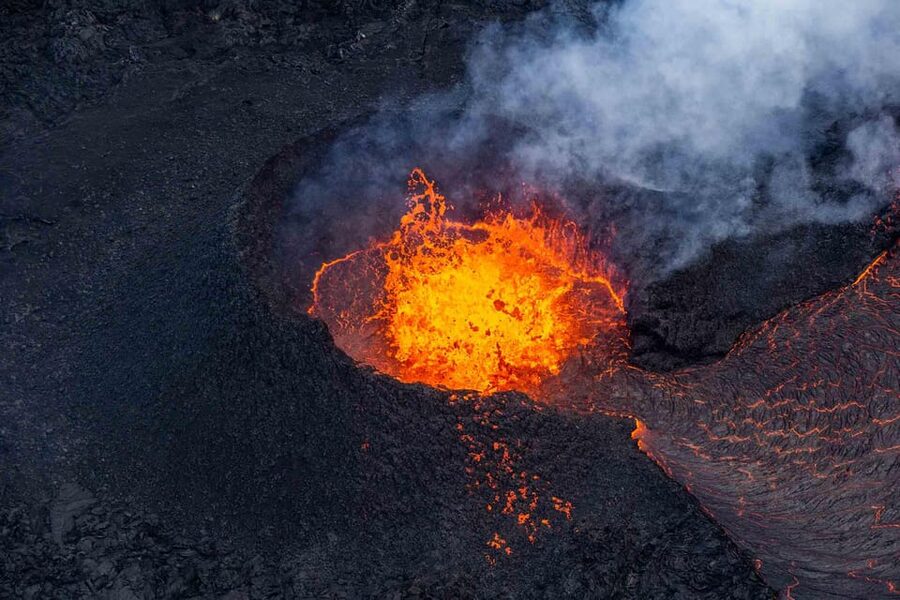
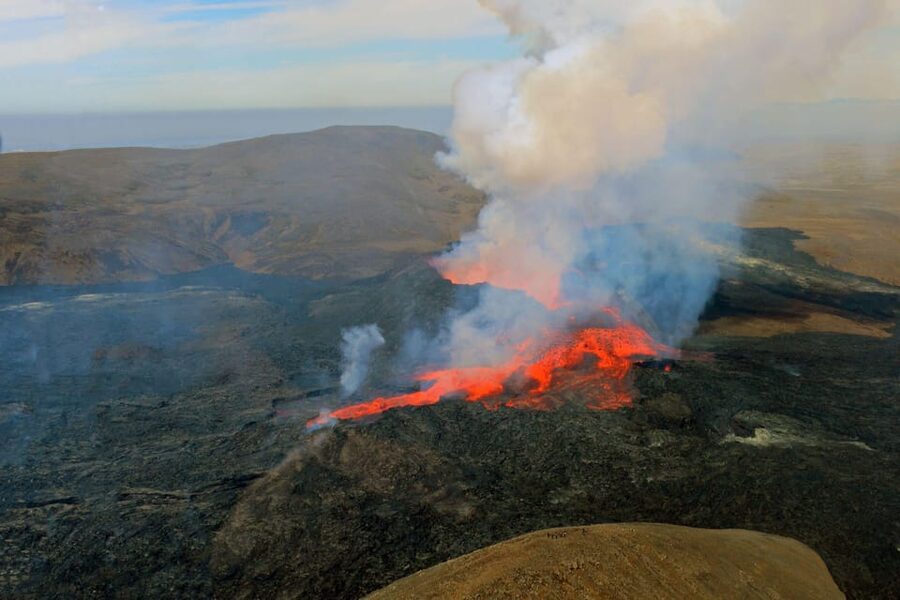
The most striking part of this flight is the chance to look straight down on Iceland’s newest eruption country. From the helicopter, Sundhnúkahraun’s black lava fields and the broad scars around Fagradalsfjall and Geldingadalir make far more sense than they do from ground level. If lava is flowing, you may see it glowing inside the newest fissure.
I like the small five-person group, which gives everyone a good chance at a window view. I also like the route itself: you see the capital area, old lava fields, several recent eruption sites, and Bessastaðir in one short flight. The main drawback is the $624 price, plus the fact that weather and volcanic activity decide how much you actually see.
Key points to know before you book
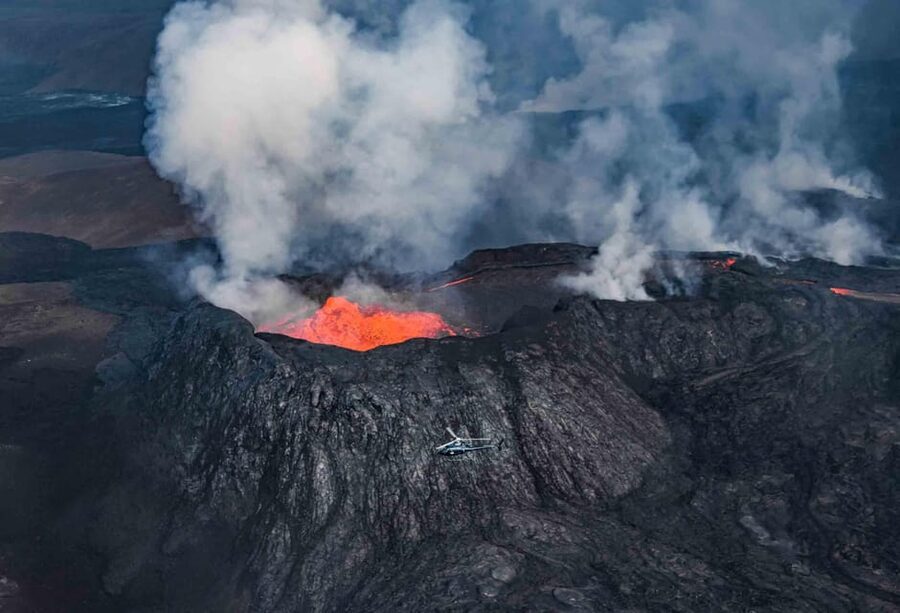
- Sundhnúkahraun from March 2024: The flight focuses on Iceland’s most recent eruption area included on this route.
- Only 45 minutes: You get a concentrated aerial tour rather than a full-day outing.
- Five participants maximum: A small cabin makes it easier to see and hear the pilot.
- Flying lava is not guaranteed: Eruptions are natural events, and conditions can change before your flight.
- Five minutes from central Reykjavik: The Reykjavik FBO is beside the Berjaya hotel at the domestic airport.
- Weather can cancel the flight: The operator will try to reschedule or offer a full refund if conditions are unsafe.
Why this helicopter flight is different from a ground visit
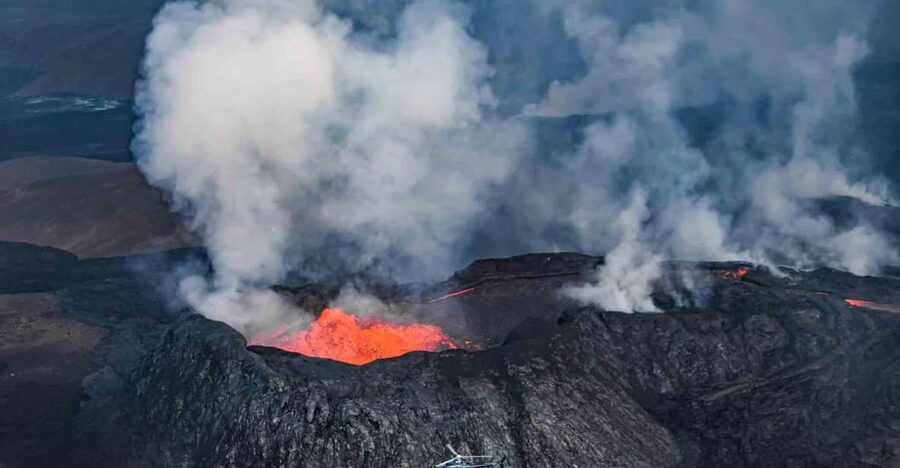
The Reykjanes Peninsula is a place of fresh lava, steaming ground, old craters, and roads that cross huge stretches of dark volcanic rock. On foot, you can get close to some volcanic areas, but you cannot easily grasp the size and pattern of the eruption zones. From above, the cracks, cones, and lava flows become a single readable picture.
This is especially useful if you have limited time in Iceland. The flight leaves from Reykjavik rather than requiring a separate drive to the peninsula, and the 45-minute route covers several major points before returning to the city. You spend less time getting there and more time looking down at the places that drew you south.
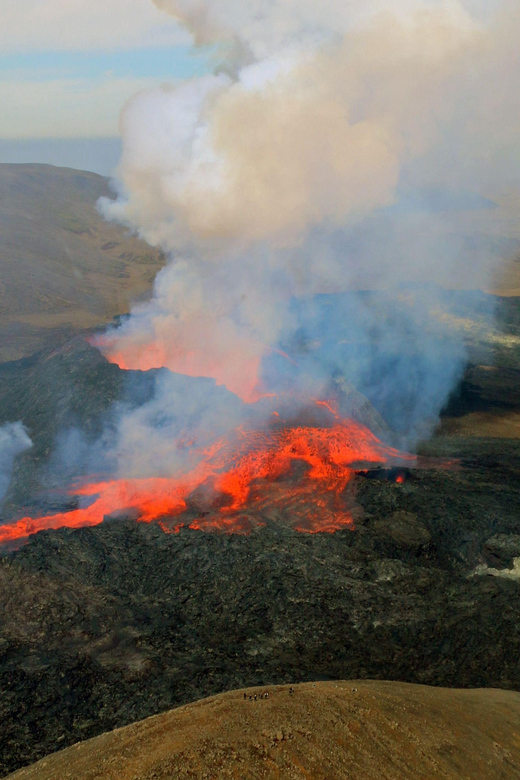
The aerial view also changes with volcanic conditions. If the newest site is quiet, you still see hardened lava from recent eruptions and older fields dating back hundreds of years. If there is flowing lava, that becomes the natural focus of the flight, but you should book for the volcanic scenery rather than for a guaranteed red glow.
More Volcano Tours in Reykjavik
- Golden Circle with Kerid Volcanic Crater Day Tour from Reykjavik
★ 4.5 · 2,826 reviews - Golden Circle, Volcano Crater and Blue Lagoon Small-Group Tour
★ 5.0 · 1,932 reviews - Reykjavík: Volcano Eruption Site and Reykjanes Hiking Tour
★ 4.6 · 1,066 reviews
Starting at Reykjavik Domestic Airport
Your meeting point is the Reykjavik FBO, a small flight facility next to the Berjaya hotel. Look for the operator’s sign on the building. The base is only about five minutes from central Reykjavik, so reaching it is much easier than arranging transport to a distant airfield.
Airport staff meet you with the pilot and give a short briefing about the route. After that, you walk onto the tarmac and board the helicopter. This is a working airport setting, not a large tourist terminal, so allow a little extra time to find the right building. One practical warning: a past departure had a locked door and no staff present for more than 30 minutes before help was found elsewhere in the building. That appears to have been an isolated problem, but arriving early is sensible.
The flight is offered in English, and the pilot acts as both your aviator and guide. The short briefing should help you understand the general route, safety instructions, and what you will see from the air. Because the group is capped at five, the experience should feel more personal than a large sightseeing flight.
First views over Reykjavik and the capital region
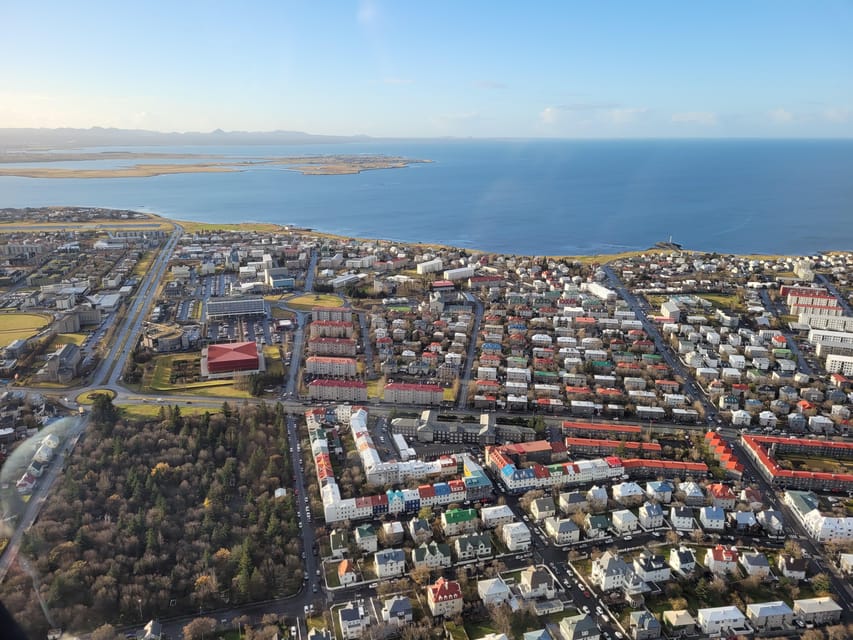
Once airborne, the helicopter crosses the capital area. This opening section lasts about five minutes, so it is not a full city tour, but it gives you a useful view of Reykjavik before the volcanic scenery takes over.
You may see the city spread out along the coast, with the built-up area giving way to open ground. The capital is also a good reference point for the rest of the trip. You begin with familiar urban sights, then watch the surroundings become increasingly shaped by lava and volcanic craters.
This part of the route is brief, and that is worth understanding before you book. If your main goal is Reykjavik sightseeing, choose a dedicated city tour. Here, the capital is the starting frame for a flight focused on the Reykjanes Peninsula.
Crossing old lava fields toward Reykjanes
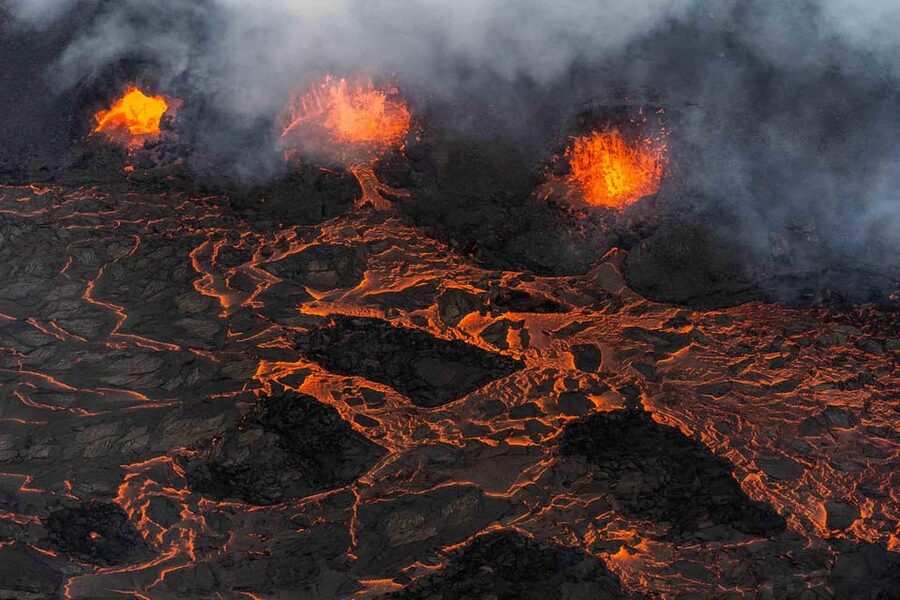
The helicopter then heads toward Reykjanes, passing over lava fields formed hundreds of years ago. These older flows tend to look more weathered than the newest eruption areas, and the contrast helps you see how volcanic ground changes with time.
From the air, you can spot the uneven edges of lava fields and the rounded shapes of volcanic craters. The pilot explains the volcanic story of the area as you go, linking older formations with the eruptions that reshaped the peninsula in recent years.
I find this middle section valuable because it gives context. The newest eruption site is more dramatic, but it makes better sense when you have first seen the older ground around it. You are not just looking at a black field from above. You are seeing different stages of volcanic change along one route.
Same base, a completely different sort of day out:
- Reykjavik: Golden Circle Full-Day Tour with Kerid Crater
★ 4.8 · 24,485 reviews - Reykjavik Food Walk – Local Foodie Adventure in Iceland
★ 5.0 · 18,952 reviews - Iceland: Northern Lights Bus Tour from Reykjavik
★ 4.1 · 11,161 reviews - Reykjavík: South Coast Waterfalls, Black Sand & Glacier Tour
★ 4.8 · 11,030 reviews
Sundhnúkahraun and the March 2024 eruption area
The main reason to book this flight is the view of Sundhnúkahraun, identified as the most recent eruption site on the route, from March 2024. The pilot takes you over the lava fields and explains what happened in the area.
The helicopter may circle the site and make several approaches so you can see it from different angles. That is particularly useful for photography, since one side of the cabin may have a better view at one moment and another side may improve as the aircraft turns.
You should keep your expectations realistic. The eruption may not be active during your visit, and the operator cannot promise visible lava. Volcanic activity is controlled by nature, while the flight is also subject to weather, aviation rules, and instructions from Iceland’s Department of Civil Protection and Emergency Management.
Even without flowing lava, the new field can be the most memorable part of the trip. Fresh lava has a rough, irregular appearance, and from above you can see how it spread away from the eruption zone. If glowing lava is present, it is an extraordinary bonus, not the product you can guarantee with a booking.
Fagradalsfjall and Geldingadalir from above
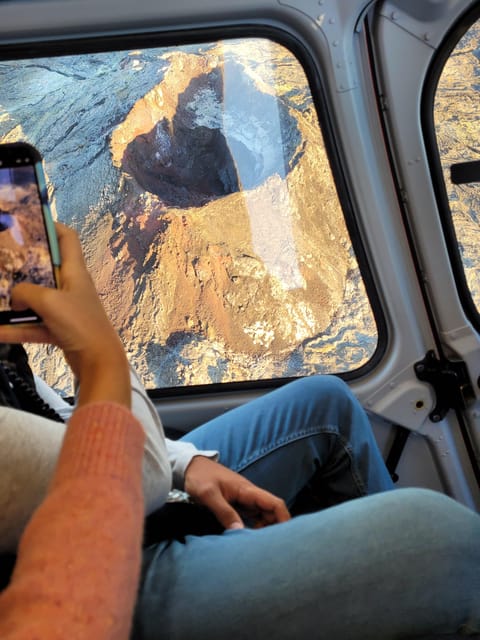
The route also reaches the large craters created by the Fagradalsfjall and Geldingadalir eruptions between 2021 and 2022. These sites form an important comparison with Sundhnúkahraun.
Rather than seeing only one eruption, you can trace a recent sequence of volcanic activity across the peninsula. The pilot points out the crater areas and the lava produced by those earlier events. The view helps show how separate eruption sites sit within the same wider volcanic zone.
This is where the helicopter offers something a roadside stop cannot. You can see the shape of the craters and the reach of the lava at once. Ground access may bring you closer to the rock, but the aircraft gives you the clearest sense of scale.
The route does not turn the flight into a hike, and that matters. You will not walk on the lava or spend time at a viewing platform. If you want a physical encounter with the eruption sites, a land-based excursion may suit you better. If you want to compare several sites in one outing, the helicopter has the advantage.
The return past Bessastaðir
After the volcanic section, the pilot turns back toward Reykjavik. The return portion includes roughly five minutes of sightseeing around Bessastaðir, the official residence of Iceland’s president.
The home is not the central attraction, but it adds a pleasant closing detail. If you know where to look, you may be able to spot it from above. This final stop also shifts the mood from stark volcanic ground back toward the settled coast and capital region.
The helicopter then returns to Reykjavik and lands at the same FBO. The full route is planned at around 45 minutes, with approximately five minutes over the capital region, 30 minutes around Reykjanes, and another five minutes near Bessastaðir before the return.
What the small group and pilot add
With no more than five participants, you avoid the feel of a packed sightseeing cabin. That does not guarantee a perfect view at every second, but it does give the aircraft a less crowded feel and makes it easier to follow the pilot’s commentary.
The pilots are described as friendly and informative, and the strongest part of the guiding is the explanation of the volcanic activity. You are shown the active or recent sites several times when conditions allow, rather than simply flying over them once and moving on.
A helicopter cabin also gives you a changing viewpoint. The pilot can circle volcanic features and approach the eruption areas from more than one direction. That helps when you want photographs, though reflections, cabin framing, and changing light can still affect your pictures.
Bring a camera, but keep watching with your own eyes. The flight is short, and it would be a shame to spend all 45 minutes managing a phone. The best photographs will depend on weather, position, and volcanic conditions, none of which the operator can fully control.
Is $624 a fair price?
At $624 per person, this is an expensive Iceland activity. The price includes taxes and airport fees, but not a full-day outing or transport around the peninsula. You are paying for the helicopter, the pilot, the small group, and the rare chance to see recent eruption sites from an angle that is difficult to arrange independently.
The value depends on what you want from Iceland. If your trip already includes a long drive around Reykjanes and you are happy seeing volcanic sites from the ground, this may feel like a costly extra. If you have limited time, dislike long road transfers, or place a high value on aerial views, the flight can justify its price.
I would think of it as a special-interest experience rather than a standard sightseeing ticket. It is not the best choice for someone seeking the cheapest way to see Iceland. It is a strong choice for a person who specifically wants to understand the recent eruptions from above and is willing to pay for that access.
Weather, cancellations, and volcanic uncertainty
All flights depend on weather and must follow instructions from Iceland’s Department of Civil Protection and Emergency Management. Wind, visibility, or other conditions outside the operator’s control can affect the flight.
If the flight is cancelled for those reasons, the operator will try to arrange another time or provide a full refund. You can also cancel up to 24 hours ahead for a full refund, according to the booking conditions. Reserve-and-pay-later booking is available, which helps if your schedule is still changing.
The biggest uncertainty is not only the weather. The eruption may be inactive, and flowing lava may not be visible. You should be comfortable paying for the volcanic setting, the craters, and the aerial view even if the newest site is quiet.
The activity is not suitable for children under two. Other than that, the supplied details do not list extra physical requirements, but you should follow the airport and pilot instructions carefully.
Who should book this flight?
I would recommend it to you if you have a strong interest in volcanoes, geology, photography, or recent Icelandic events. It also works well for a short Reykjavik stay, since the base is close to the center and the entire flight takes less than an hour.
It suits couples, small groups, and solo visitors who want a focused outing without spending most of a day on the road. The five-person limit is useful if you prefer a quieter experience and want the pilot’s explanation to remain easy to follow.
I would hesitate if $624 would force you to cut other major activities from your Iceland budget. I would also hesitate if your only goal is guaranteed flowing lava. No operator can promise that here, and the weather may prevent the flight altogether.
My verdict on the Reykjanes helicopter tour
Book this experience if you want the clearest possible view of Iceland’s recent eruption areas and you accept the price and uncertainty. The combination of Sundhnúkahraun, Fagradalsfjall, Geldingadalir, older lava fields, and Bessastaðir gives the 45-minute route a lot of variety.
The flight is at its best when you treat flowing lava as a lucky extra. The real value is the chance to see how several eruption sites fit together, with a pilot explaining what lies below you. For a volcanic view that is short, close to Reykjavik, and limited to five people, this is a memorable splurge.
FAQ
Where does the helicopter tour start?
The tour starts at the Reykjavik FBO at Reykjavik Domestic Airport. The building is marked with the operator’s sign and is located next to the Berjaya hotel.
How long does the activity last?
The helicopter tour lasts 45 minutes. Starting times vary, so you need to check availability when booking.
What language is the tour conducted in?
The live tour guide and pilot commentary are provided in English.
How many people can join the flight?
The activity is limited to five participants, making it a small-group helicopter flight.
Which volcanic sites will I see?
The route includes Sundhnúkahraun from March 2024, the Fagradalsfjall and Geldingadalir eruption areas from 2021 to 2022, older lava fields, and various volcanic craters.
Is flowing lava guaranteed?
No. Flowing lava may or may not be visible during your flight because eruptions are natural events and volcanic activity changes.
What happens if bad weather cancels the flight?
The operator will try to reschedule the flight or provide a full refund if weather or another factor outside its control makes the flight impossible.
More Helicopter Tours in Reykjavik
- From Reykjavik: New Volcanic Area Helicopter Tour
★ 4.8 · 500 reviews - 1-Hour Helicopter Tour in Iceland: The Geothermal Tour
★ 4.9 · 263 reviews - Helicopter Tour with Mountain Summit Landing from Reykjavik
★ 5.0 · 243 reviews - Iceland Volcanic Eruption Area Helicopter Tour from Reykjavík
★ 4.5 · 196 reviews
Just added around Reykjavik
- Northern Lights Private Tour from Reykjavik★ 5.0 · 3 reviews
- Private South Coast Tour: A Journey to Iceland’s Stunning Shore★ 4.5 · 3 reviews
- Golden Circle Private Tour Tomato Soup Lunch and Secret Lagoon with Photography★ 5.0 · 3 reviews
- Hot and cold G spots challenge★ 5.0 · 3 reviews
- Personalised Travel Plan and itinerary for Iceland★ 4.5 · 3 reviews
- Authentic Reykjavik Food Tour with Flea Market Delights★ 4.2 · 3 reviews
- Blue lagoon Premium and Private Golden circle tour★ 5.0 · 3 reviews
- Exclusive Westman Islands Adventure – A Private Day Tour★ 5.0 · 3 reviews
Reykjavik Tours, compared.
Golden Circle Full-Day Tour with Kerid Crater
Read our review →
Reykjavik Food Walk – Local Foodie Adventure in Iceland
Read our review →
South Coast Waterfalls, Black Sand & Glacier Tour
Read our review →
Sky Lagoon Entrance Pass With 7-Step Spa Ritual
Read our review →
Iceland South Coast Full Day Small-Group Tour from Reykjavik
Read our review →Browse the lists this tour appears in