
Reviewed · VIK TOURS
Micro group – Ice climbing at Sólheimajökull
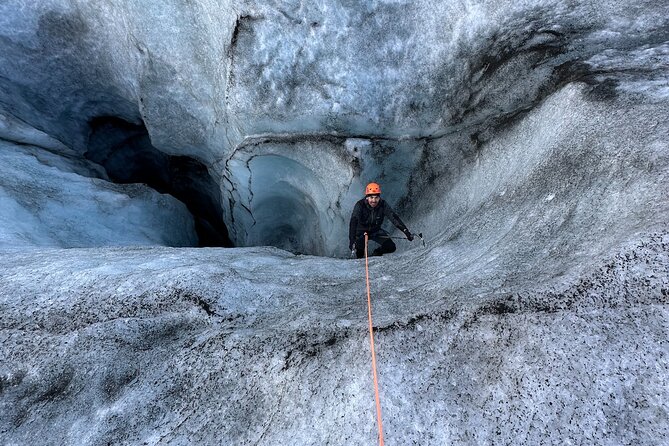
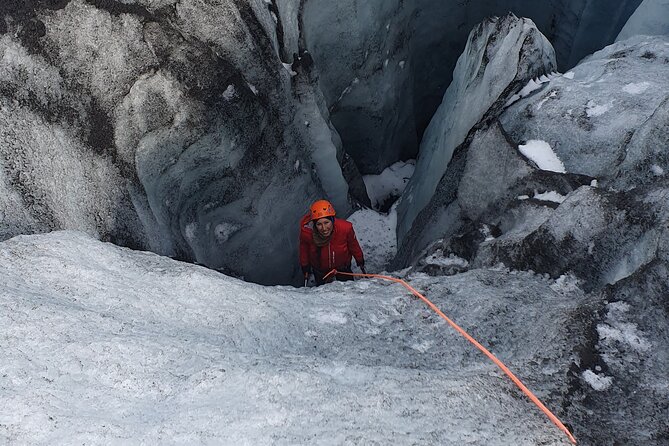
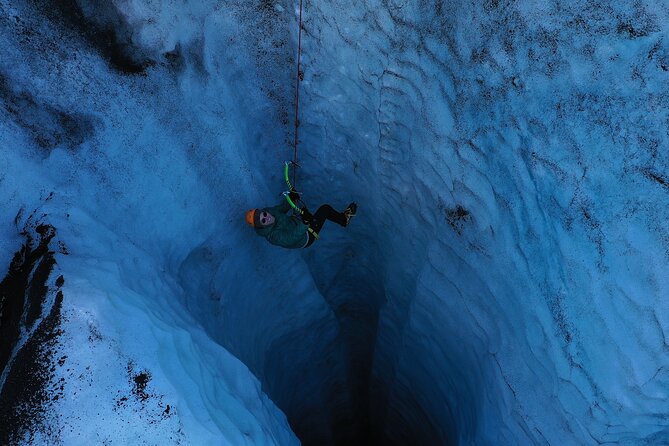
At Sólheimajökull, you do not simply walk across the ice and take photos. You cross crevasses and moulins, learn how to move with crampons and ice axes, then climb into a suitable ice wall under your guide’s watch. That hands-on work is the main appeal of this small-group outing.
I like the maximum group size of four, which gives the guide room to adjust the climbing to your ability. I also like the chance to try more than one route, since the guide can look for different levels of difficulty during the four-hour session.
The main caution is simple: this is a physical activity, not a scenic stroll. You need moderate fitness, proper clothing, and sturdy boots, neither of which is supplied. Weather can also force a cancellation or change of date.
Key points at a glance
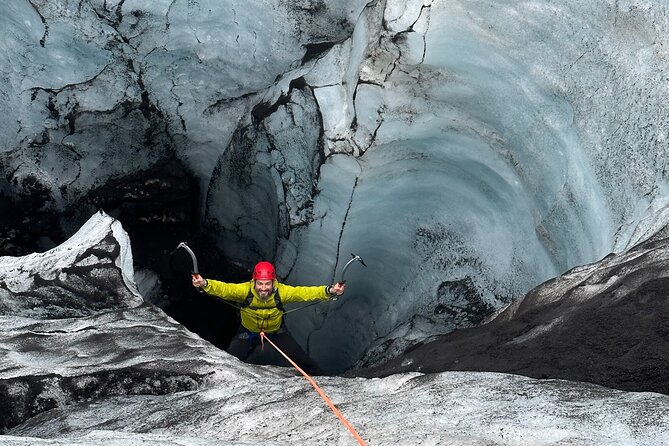
- Climb real glacier ice: Learn to use crampons and ice axes on crevasses and moulins at Sólheimajökull.
- Very small group: The outing is limited to four people, a useful setup for instruction and individual attention.
- Four hours on the ice: Allow time for the 15-minute approach, safety briefing, gearing up, climbing practice, and movement between climbing spots.
- Gear is supplied: You receive a climbing belt, harness, crampons, and ice axes.
- Bring your own essentials: Clothing and boots are not included, so cold-weather preparation matters.
- Weather-sensitive activity: You can cancel for a full refund up to 24 hours before departure, and poor weather may lead to a new date or refund.
What the Sólheimajökull climb actually involves
This outing takes place at Sólheimajökull, a glacier tongue near Vik. The meeting point is the Sólheimajökull parking lot, and the activity finishes there as well. You are not collected from a hotel, so plan your route to the parking area before the start time.
The first part is a 15-minute walk from the parking lot to the glacier. That may sound brief, but you are carrying your personal items and heading toward uneven glacial ground. Wear clothing you can walk in comfortably, and do not treat the approach as a casual pavement stroll.
Once you reach the ice, the guide gives a safety briefing and helps you put on the climbing gear. The supplied equipment includes a climbing belt, harness, crampons, and ice axes. These are the key tools for the session, but they do not replace warm layers, waterproof clothing, gloves, or suitable boots. Those items are your responsibility.
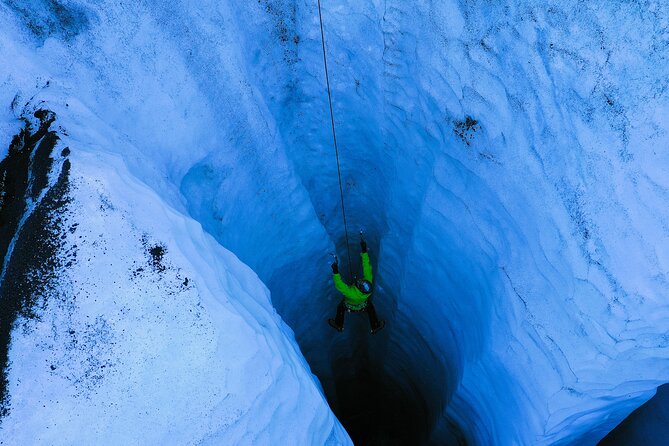
The actual route is not fixed to one single wall. You may cross crevasses and moulins while the guide searches for a good place to begin. This makes the outing more active than a short, prepared climbing demonstration, but it also means the exact shape of the session can change with the ice and the conditions.
More Solheimajokull glacier trips:
- Sólheimajökull: Guided Glacier Hike
★ 4.7 · 1,123 reviews - Sólheimajökull Glacier Hike – Adventure in a Small Group
★ 5.0 · 799 reviews - Solheimajokull Glacier 3-Hour Small-Group Hike
★ 5.0 · 501 reviews
Crossing crevasses and moulins before the first climb
The glacier itself is part of the activity. Before you start climbing, you move across the ice and pass features such as crevasses and moulins. A crevasse is a crack or opening in the glacier, while a moulin is a channel where meltwater can run into the ice. You do not approach these features independently. Your guide directs the route and explains how to move safely.
This section matters because it gives you a better sense of how a glacier works. You are not only looking at blue ice from a viewpoint. You are moving through a changing surface and learning to pay attention to where you place your feet.
The walk can also help you get used to crampons. Crampons change your stride, and ice axes require deliberate handling. The early instruction gives you time to find a steady rhythm before you are asked to climb.
The tradeoff is that the climbing location is not guaranteed to look or feel exactly as you imagined. The guide chooses a suitable crevasse or moulin based on the day’s conditions and the group’s ability. That is good for safety and instruction, but it means this is not a fixed theatrical set with one famous wall waiting at a precise spot.
Learning crampon and ice-axe technique
The guide explains how to move on the ice and how to use the climbing equipment. Expect the session to focus on practical technique rather than a long lecture. You learn by placing your feet, handling the axes, and adjusting your body to the ice.
For a first-time climber, this teaching is the heart of the activity. You need to understand how crampons grip, how the axes help you balance and pull, and how to keep your movements controlled. The guide can repeat or adjust the instructions as needed because the group is limited to four people.
That small group is one of the strongest reasons to consider this outing. In a large class, you could spend much of the day waiting for a turn. Here, the four-person limit gives you a better chance to ask questions and receive corrections before a minor mistake becomes a bad habit.
The outing is not presented as a technical course for advanced climbers. It is a guided introduction with different difficulty levels available during the day. You may find a route that feels manageable at first, followed by a steeper or more demanding section if your group is ready.
Be honest with yourself about your fitness. The stated requirement is moderate physical fitness, and the activity includes walking on glacier ice, carrying yourself over uneven ground, and climbing. If you are looking for a low-effort way to see a glacier, a standard glacier walk would likely be a better match. If you want active participation, this session offers much more to do.
Trying more than one climbing location
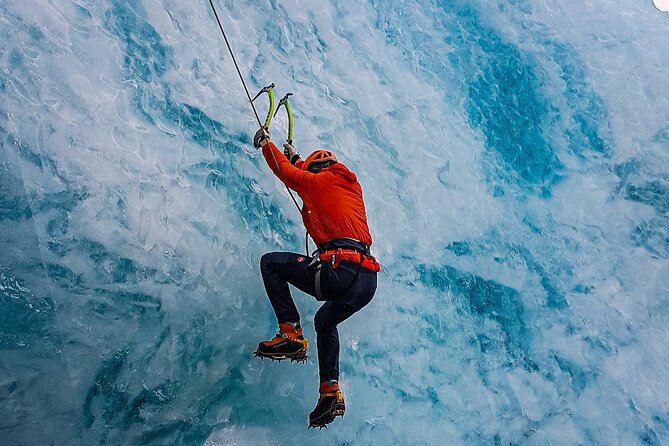
The guide can explore different locations during the day, giving you the chance to try several levels of difficulty. That flexibility is valuable because a group of four rarely has identical climbing experience or confidence.
A beginner can start with a simpler section and work toward a more demanding climb. Someone with more experience may appreciate having a chance to test a different route rather than repeating one easy wall. The guide’s role is to match the climb to the group rather than push everyone toward the same goal.
The wording here is important: you have an opportunity to try different levels, not a promise of a particular number of climbs or a specific technical grade. Glacier conditions, weather, and the group’s pace all affect what fits into the four-hour session.
I would also expect the day to feel less rushed than a short one-hour activity. The schedule allows time to reach the ice, gear up, receive instruction, move between suitable areas, and climb. Still, four hours passes quickly once equipment and route changes are included. You should not book this expecting an entire day of nonstop climbing.
More ice climbing in Vik:
- Sólheimajökull Glacier Hike & Ice Climbing Intro – Small Group
★ 4.5 · 151 reviews - Sólheimajökull Ice Climbing and Glacier Walk
★ 5.0 · 132 reviews - Small-Group Ice Climbing and Glacier Hiking in Solheimajokull
★ 4.5 · 21 reviews - Exclusive Ice Climbing Experience on Sólheimajökull
★ 5.0 · 3 reviews
Why a four-person group changes the value
The price is $260 per person. That is a serious amount for a half-day activity, but the comparison should not be with a simple sightseeing ticket. You are paying for a guided glacier outing, technical equipment, instruction, route selection, and a group capped at four people.
The small group is especially important to the value. With only four participants, the guide can keep the instruction personal and spend less time managing a crowd. That setup is likely to suit you if you are new to ice climbing and want clear guidance rather than a quick turn on a wall.
The price is harder to justify if you mainly want photographs of Sólheimajökull or a gentle walk on the ice. The climbing element is what makes the cost worthwhile. If you will not enjoy physical exertion, the expensive gear and instruction will not add much value.
The experience has earned a five-star rating from the ten supplied ratings, with every one recommending it. The strongest praise focuses on the guide’s ability to make the activity fun, adapt to the group, and provide strong instruction. One couple booked at the last minute and still described it as one of their most enjoyable activities, which suggests the format can work well for spontaneous plans when a place is available.
That said, ten ratings is a small sample. I would take the consistently positive feedback as a useful sign, not as a guarantee that every person will find the physical effort easy or the weather cooperative.
What to wear and what to bring
The supplied equipment covers the technical climbing basics:
- Climbing belt
- Harness
- Crampons
- Ice axes
Clothing and boots are not included. This is the most important practical point to handle before you arrive. You need clothing suited to cold, wet, windy conditions, along with boots that work with the crampons provided by the guide.
The information does not specify a required boot model or clothing list, so confirm the exact footwear requirements with Hyperborea Tours before the outing. It is better to settle that question before driving to the parking lot than to discover that your boots are unsuitable at the glacier.
Plan for movement, not just standing around. You will walk for 15 minutes from the parking area, cross ice, and climb. Flexible warm layers are more useful than a single bulky garment, since you may warm up while moving and cool down during instruction or pauses.
Keep your personal load light. Anything you carry from the parking lot stays with you during the approach and may be awkward on the ice. The tour details do not specify storage arrangements, so do not assume that large bags can be left safely at the meeting point.
Timing, meeting point, and weather
The activity lasts about four hours and begins and ends at Sólheimajökull, 871, Iceland. The practical benefit is a clear start and finish point, but you must arrange your own transport to the parking lot.
The activity is offered in English. Confirmation is provided when you book, and the booking is usually made about eight days ahead. That advance pattern is not a rule, but it suggests you should reserve early if your Iceland schedule has little flexibility, especially since the group is limited to four.
Weather is not a minor footnote here. Glacier climbing depends on safe conditions, and the activity may be canceled if the weather is poor. In that case, you are offered another date or a full refund.
You can cancel for a full refund if you do so at least 24 hours before the local start time. Cancellations or changes made inside that 24-hour window are not accepted for a refund. Keep this in mind when planning around Iceland’s road and weather conditions. A flexible schedule is helpful, but do not wait until the last minute if you already know you cannot attend.
Who will enjoy this most
I would recommend this outing to you if you want an active glacier experience and like learning a new physical skill. It suits first-time ice climbers who are comfortable following instructions and trying something that may feel unfamiliar at first.
It is also a good match for couples or friends who want a shared challenge rather than a passive excursion. The small group should make it easier for you to work at a similar pace and encourage one another without the feel of a large tour.
You should think twice if you have limited mobility, poor balance, or little tolerance for cold and exertion. The stated fitness level is moderate, and the route includes walking on glacier ice and climbing. The supplied information does not give a specific accessibility assessment, so ask the operator directly if you have concerns about mobility or equipment.
This is not aimed at people seeking a long, advanced mountaineering course. The session introduces glacier climbing, teaches the basic movements, and offers different difficulty levels as conditions and ability allow. Experienced climbers may enjoy the setting, but the main value is the guided structure and access to varied ice features.
The guide makes or breaks the session
Technical equipment alone does not make a good ice-climbing day. You need a guide who can explain the movement clearly, watch the group, choose suitable ice, and keep the mood relaxed when someone is nervous.
The supplied feedback gives the guide high marks for being skilled, accommodating, and able to make the outing fun. That combination matters. A guide who only focuses on safety may make the session feel stiff, while a guide who focuses only on fun may rush the important instruction. The best part of this format is the balance between careful teaching and the excitement of trying a real climb.
No guide names are provided, so I cannot tell you who will lead your specific departure. You can expect instruction in English, but ask Hyperborea Tours about the assigned guide if personal preferences or communication needs matter to you.
Should you book Sólheimajökull ice climbing?
Book it if you want to do more than admire a glacier. The chance to cross crevasses and moulins, learn crampon and ice-axe technique, and try different climbing locations gives you a hands-on experience that a standard viewpoint cannot match.
The strongest reasons to choose it are the four-person limit, the supplied climbing gear, and the guide’s ability to adjust the outing to different skill levels. The main reasons to skip it are the $260 price, the need to bring suitable clothing and boots, the moderate fitness requirement, and the risk of weather cancellation.
My practical call: choose this activity if the climbing itself is the point of your day near Vik. If you only want glacier scenery, save the money for a simpler outing. If you want a compact challenge with personal instruction, this is a strong choice, provided you arrive properly dressed and keep your schedule flexible.
FAQ
Where does the ice-climbing activity start and finish?
It starts at the Sólheimajökull parking lot at Sólheimajökull, 871, Iceland. The activity ends back at the same meeting point.
How long does the activity last?
The session lasts approximately four hours. This includes the 15-minute walk to the glacier tongue, the safety briefing, gearing up, instruction, and climbing.
How many people can join the group?
The activity has a maximum of four travelers. This makes it a micro-group outing with a limited number of participants.
What climbing equipment is included?
The tour includes a climbing belt, ice axes, a harness, and crampons.
Are clothing and boots provided?
No. Clothing and boots are not included, so you must bring your own. Contact Hyperborea Tours for any exact boot or clothing requirements before departure.
What happens if the weather is too poor for the activity?
If poor weather causes a cancellation, you are offered a different date or a full refund. You can also cancel at least 24 hours before the local start time for a full refund.
Just added around Vik
- Exclusive Ice Climbing Experience on Sólheimajökull★ 5.0 · 3 reviews
- Easy Hike on Sólheimajökull Glacier★ 5.0 · 3 reviews
- Highland Snowmobiling Tour in Southern Iceland★ 5.0 · 3 reviews
- Private Ice Climbing on Sólheimajökull★ 5.0 · 3 reviews
- Þórsmörk Buggy Adventure Tour in Southern Iceland★ 5.0 · 4 reviews
- South Coast Including Vatnajökull National Park and Jökulsárlón Glacier Lagoon★ 4.0 · 4 reviews
- Hvolsvöllur: Private Thorsmork Guided Day Hike by Super Jeep★ 5.0 · 4 reviews
- Private Glacier Hike on Sólheimajökull★ 5.0 · 4 reviews
Vik Tours, compared.
Jokulsarlon Glacier Lagoon Full-Day Guided Trip
Read our review →
South Coast Classic: Full-Day Tour from Reykjavik
Read our review →
Ice Cave by Katla Volcano Super Jeep Tour from Vik
Read our review →Browse the lists this tour appears in