
Reviewed · REYKJAVIK TOURS
Dive the Divide: Silfra Fissure Scuba Tour | Meet at Thingvellir
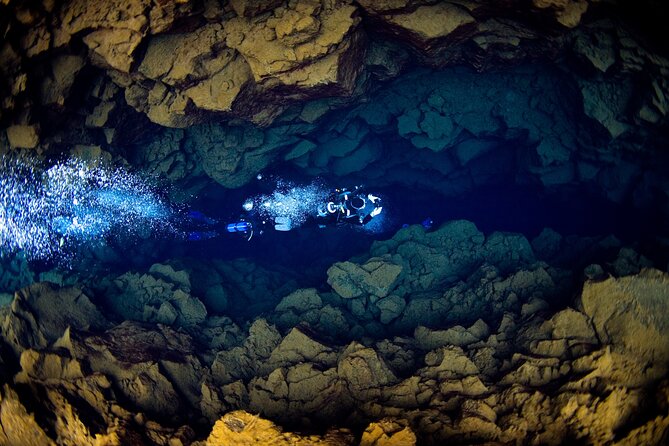
Silfra is one of those rare places where the setting does most of the talking. You swim through water so clear that visibility can exceed 100 meters, passing between the North American and Eurasian continental plates at Thingvellir National Park. The blue is sharp and clean, and the route through the fissure feels far more unusual than a standard pool or coastal scuba outing.
I like the three-person maximum, which gives your PADI Divemaster room to watch your equipment, trim, and comfort closely. I also like the small comforts after a demanding session: hot chocolate, cookies, and the chance to change into dry clothes before you leave. The main drawback is simple: this is physically hard, especially the 400-meter walk while carrying heavy tanks and gear.
Key points to know before booking
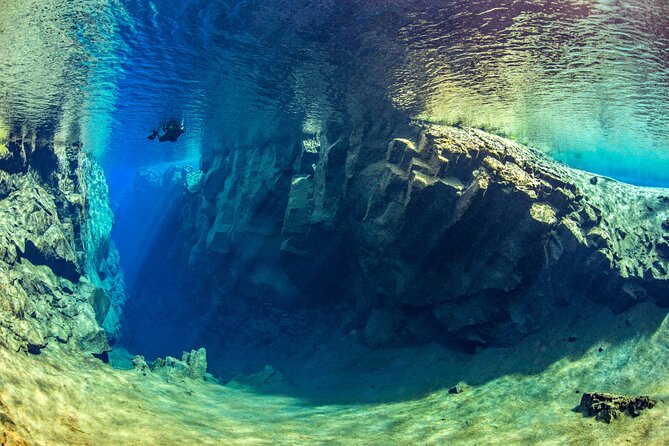
- The water can be clear beyond 100 meters, giving Silfra its famous blue, glass-like look.
- You need real drysuit experience, either a certification card or a logbook showing at least 10 previous drysuit dives.
- The group has no more than three people, so the guide can keep close watch.
- The walk to the water is about 400 meters, and you carry substantial equipment along the way.
- Winter conditions can shorten the experience to one dive of about 45 minutes if the water temperature falls below freezing.
- Franceska has been especially attentive with equipment and cold-weather comfort, including warming gloves and helping with drysuits.
Why Silfra feels unlike ordinary scuba
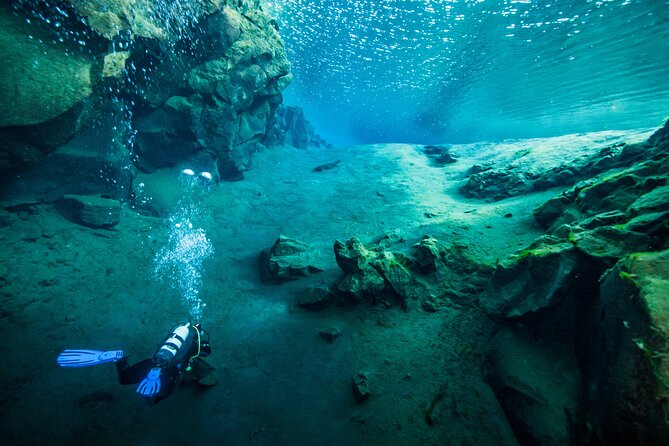
Silfra is not famous because of colorful coral, tropical fish, or warm water. It is famous for geology and clarity. The fissure sits in Thingvellir National Park, where the two continental plates lie close together. Underwater, you move through a narrow crack before the route opens into larger chambers and a brilliant-blue lagoon.
The water comes from underground filtration, which explains its remarkable cleanliness and visibility. You can safely taste it during the opening checks. That small moment helps you understand the place better: this is not murky lake water or a busy harbor. It is cold, clear water flowing through volcanic rock.
You should also set realistic expectations. The cold is part of the experience, even inside a drysuit. One strong review described snow beside the fissure and a guide who helped warm gloves and manage the drysuit process. That detail matters. Franceska’s calm, supportive approach was praised, but even good instruction cannot make the water warm.
The payoff is a strange, quiet route through blue rock walls. You are not simply looking at an Icelandic attraction from a platform. You are moving through it slowly, with your breathing, buoyancy, and equipment all demanding attention.
More Silfra snorkelling and diving trips:
- Silfra: Snorkeling Between Tectonic Plates – Meet on Location
★ 5.0 · 5,001 reviews - Reykjavík: Silfra Fissure Snorkeling between Two Continents
★ 4.7 · 1,712 reviews - Silfra Drysuit Snorkeling with Free Photos – Meet on Location
★ 5.0 · 1,299 reviews
Meeting at Thingvellir and getting ready
You meet your instructor at the Silfra meeting point in the parking area at Thingvellir National Park. Pick-up from Reykjavik is not included, so you arrange your own transport. The national park charges a small parking fee, listed as 500 ISK for a private car.
After introductions, the instructor gives a detailed briefing. This covers park rules, hand signals, equipment, the route, and the practical demands of drysuit scuba. I would pay close attention here, especially if your last drysuit session was some time ago. Silfra is not the place to rely on vague memory.
Your guide also checks your experience. You must show a drysuit certification card or a logbook proving at least 10 previous drysuit dives signed by a dive professional. You must have used a drysuit within the past two years. These requirements are not minor paperwork. They tell you that this is a serious cold-water outing, not an introductory scuba lesson.
The equipment provided includes:
- Drysuit
- Thermal undersuit
- Mask
- Fins
- Tanks
- Weights
- Regulator
Wear warm fleece or wool undergarments and warm socks. Bring a complete change of clothes. A drysuit can leak, even when properly fitted, and changing into dry clothing is a sensible precaution rather than an optional extra.
The 400-meter walk to the fissure
Before reaching the water, you carry your equipment for roughly 400 meters, or about 1,312 feet. This is one of the most important details in the entire experience. You need strong physical fitness, and the weight of tanks and gear can make the approach more tiring than expected.
The walk is not a scenic stroll with a light daypack. You are moving in bulky equipment toward the entrance, and the route requires enough stamina to arrive ready for the underwater portion. If carrying heavy gear over that distance sounds difficult, ask yourself honestly if the famous visibility is worth the effort.
Once you reach the entrance, you descend a ladder to a submerged metal platform. You stand in waist-deep water while getting used to the equipment and temperature. The guide carries out weight and safety checks before you proceed.
This gradual start is useful. It gives you a moment to check the mask seal, regulator, drysuit, and buoyancy before entering the more enclosed sections. You may also taste the water at this point. It is safe to drink, though the experience is more about the clarity than the flavor.
The route from Deep Crack to Silfra Lagoon
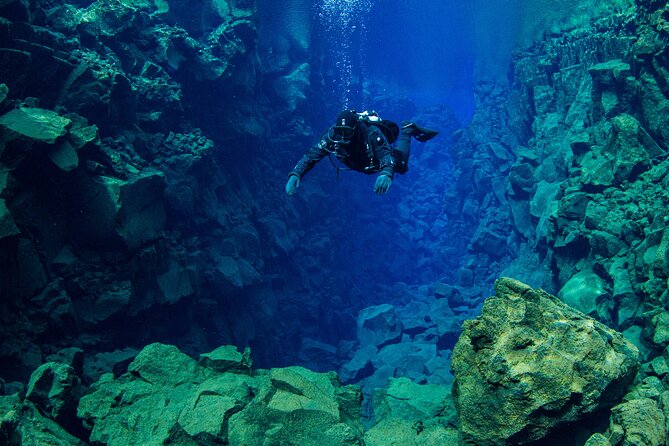
The underwater route begins in the Silfra Deep Crack, where the continental plates are close together. The narrow passage gives the experience its strongest sense of place. You are not swimming across an open lake. You are moving through a geological split.
As the crack widens, you reach Silfra Hall. The space opens up, giving you more room to appreciate the blue water and the lava walls. Visibility is the star here. Objects remain sharply visible at distances that would be impossible in most lakes or coastal sites.
The route continues into Silfra Cathedral, described as the deepest point of the route. The supplied tour details list the Cathedral at 22 meters, while the general depth limit is listed as 18 meters. Because those figures do not match, you should confirm the exact depth profile and maximum planned depth with Arctic Adventures before booking. Either way, you need to be comfortable with cold-water, drysuit scuba and controlled movement in an enclosed geological setting.
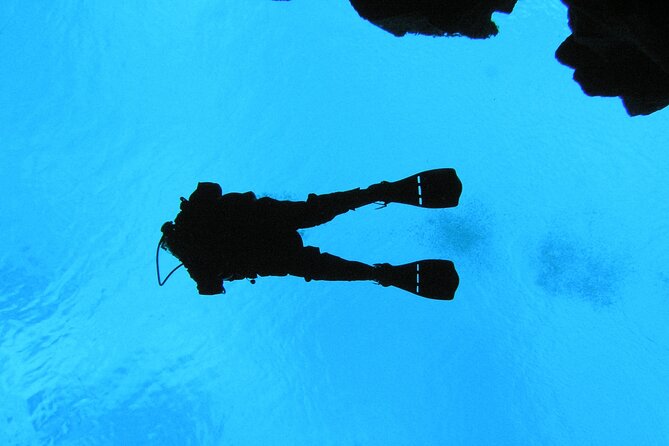
Silfra Lagoon comes later, with a more open feel and what can appear to be endless visibility. The name suggests calm water, but do not mistake the final section for a relaxed swim. You still need to manage buoyancy, breathing, fins, and the cold.
The guide leads the route and keeps the group together. With a maximum of three people, this format should feel more personal than a large group session. It also means you are not lost in a crowd while dealing with unfamiliar equipment.
More Thingvellir park visits:
- Thingvellir: Silfra Fissure Diving with Optional Pickup
★ 4.6 · 73 reviews - Exclusive Thingvellir National Park Private Day Tour
★ 5.0 · 5 reviews - Thingvellir: Silfra Freedive Adevnture with a Guide
★ 4.8 · 40 reviews
Summer and winter timing
The experience lasts about four hours from meeting point to finish, but the time in the water changes with the season.
In summer, you may make two dives of about 30 minutes each. This gives you two shorter periods in the water rather than one long session. A break between them is useful because cold and equipment fatigue can build quickly.
In winter, if the water temperature is below freezing, the instructor may run one dive of roughly 45 minutes instead. This is a safety decision, not a reduction in service. The one-session format can be easier to manage in harsh conditions, though it also means less time underwater than the summer schedule.
Weather can affect the departure. If the operator cancels because conditions are poor, you are offered another date or a full refund. You can also cancel for a full refund if you do so at least 24 hours before the start time. Changes or cancellations inside that window are not accepted.
Cold, comfort, and the guide’s role
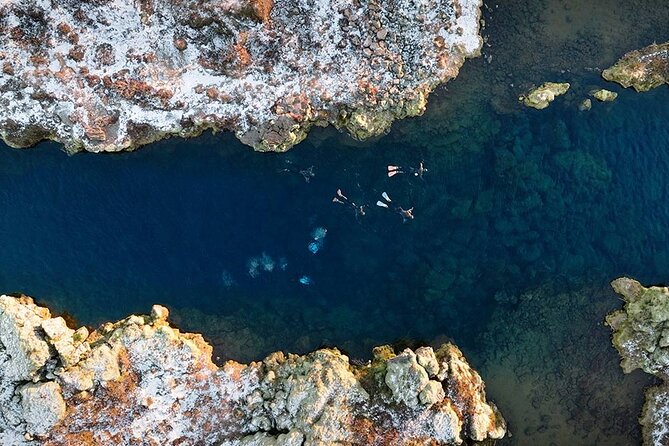
A good guide matters here more than on many easy sightseeing trips. The cold, the drysuit, the heavy gear, and the narrow route create several points where you may need quick help.
Franceska received particularly strong praise for warming gloves, helping with drysuits, and keeping the mood calm and encouraging. Those are practical acts, not empty hospitality. Cold fingers make equipment handling harder, and a rushed dressing process can sour the whole morning before you even reach the water.
You should expect to feel cold. The water is not tropical, and snow may be present beside the entrance during winter. Your thermal undergarments and socks matter. So does your attitude. This outing suits someone who can accept discomfort for a short time in exchange for an unusual setting.
The instructor’s safety focus is also important. You receive a briefing on signals and procedures, and the guide watches the group through the route. Still, the instructor cannot remove the need for personal skill. You must be comfortable with drysuit buoyancy and cold-water procedures before arriving.
What the price includes at $296.41
At $296.41 per person, this is not a cheap way to spend four hours. The price makes more sense when you account for the specialized equipment and the level of qualification required. You receive a drysuit, thermal undersuit, tanks, weights, regulator, fins, and mask, plus a guided route with a certified PADI Divemaster.
The three-person limit is another part of the value. You are paying for a small group rather than a crowded outing, and that matters when the guide needs to check your suit, equipment, buoyancy, and comfort.
Hot chocolate and cookies are modest additions, but they are well chosen. After the walk back, equipment removal, and time in cold water, a hot drink is genuinely welcome. Food and other drinks are not included, and the park parking fee is extra.
You do not receive transport from Reykjavik, so include the cost and effort of getting to Thingvellir. If you already have a rental car or a planned visit to the park, the meeting-point arrangement is less of a burden. If you need a separate transfer, the total cost rises.
Who should book this Silfra tour
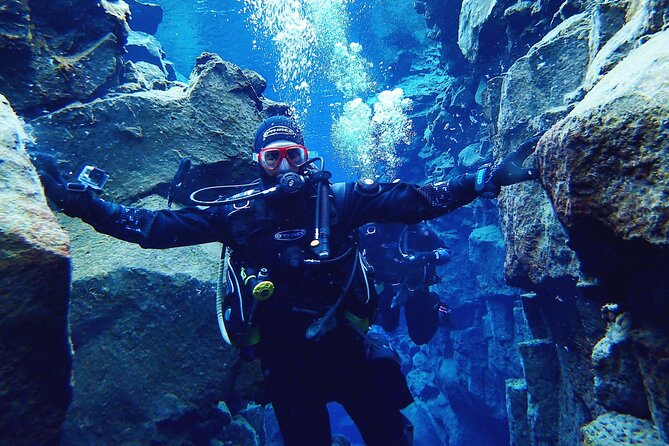
This suits an experienced scuba diver who already knows how to use a drysuit and wants a distinctive freshwater environment. You must be at least 18, physically fit, and capable of carrying heavy equipment for 400 meters.
It is especially appropriate for you if:
- You have recent drysuit experience.
- You enjoy geological and unusual underwater settings.
- You are comfortable in cold water.
- You prefer a small group with close guide attention.
- You can handle a physically demanding approach.
- You are happy to arrange your own transport to Thingvellir.
It is not a good match for a first-time scuba participant. It also may not suit you if you dislike cold, have trouble carrying heavy equipment, or need glasses under a mask. Glasses cannot be worn beneath the supplied mask. You need contact lenses or prescription goggles, or you must manage without corrective lenses.
Practical preparation that will improve the day
Book your time in advance. This experience averages 41 days of advance booking, which suggests that popular departure slots can fill well before your Iceland trip.
Pack warm clothing for before and after the session. Fleece or wool layers and warm socks are required, and a full change of clothes is strongly advised. Do not assume the drysuit will keep every drop of water out.
Bring the documents needed to prove your drysuit background. A certification card is useful, but a signed logbook showing at least 10 previous drysuit dives can also meet the requirement. Make sure one of those sessions was within the past two years.
Allow enough energy for the full outing. The underwater section may sound like the main event, but the approach, dressing, safety checks, and walk back all take effort. The four-hour estimate includes the entire process, not four hours of swimming.
FAQ
Where does the Silfra scuba tour meet?
You meet your instructor at the Silfra meeting point in the parking area at Thingvellir National Park, Vallarvegur, 806, Iceland. The activity ends back at the same meeting point.
Is transport from Reykjavik included?
No. Pick-up service from Reykjavik is not included. You need to arrange your own way to Thingvellir, and private cars must pay the park’s listed parking fee of 500 ISK.
What qualifications do I need?
You need previous drysuit experience. You must show a drysuit certification card or a logbook proving at least 10 previous drysuit dives signed by a dive professional. You must also have used a drysuit within the last two years.
How long is the tour?
The full experience lasts about four hours. In summer, you may make two dives of about 30 minutes each. In winter, if the water temperature falls below freezing, the instructor may run one dive of about 45 minutes.
Can I wear glasses under the mask?
No. Glasses cannot be worn beneath the diving mask because they can prevent the seal from working properly. You need to go without glasses, wear contact lenses, or bring prescription goggles.
What happens if the tour is canceled?
If poor weather causes the operator to cancel, you are offered another date or a full refund. You can cancel for a full refund up to 24 hours before the experience begins. Cancellations or changes made less than 24 hours before the start time are not accepted.
Should you book it?
Book this tour if you already have solid drysuit skills and want an unusual, high-effort underwater experience rather than an easy sightseeing activity. The clear water, continental-plate setting, three-person group, and close guide attention make the price easier to justify for serious scuba enthusiasts.
Skip it if you are new to drysuit scuba, uncomfortable carrying heavy equipment, or hoping for warm and relaxed water time. Silfra rewards preparation, fitness, and patience. If you arrive ready for the cold and the work, the blue chambers and remarkable visibility can make this one of Iceland’s most memorable outdoor experiences.
More Scuba Diving in Reykjavik
- Silfra: Diving Between Tectonic Plates and Pick Up from Reykjavik
★ 5.0 · 590 reviews - Dive the Divide: Silfra Fissure Scuba Tour | Reykjavik Pickup
★ 4.5 · 94 reviews - Silfra: Diving Between Tectonic Plates
★ 4.8 · 64 reviews
Just added around Reykjavik
- Northern Lights Private Tour from Reykjavik★ 5.0 · 3 reviews
- Private South Coast Tour: A Journey to Iceland’s Stunning Shore★ 4.5 · 3 reviews
- Hot and cold G spots challenge★ 5.0 · 3 reviews
- Golden Circle Private Tour Tomato Soup Lunch and Secret Lagoon with Photography★ 5.0 · 3 reviews
- Authentic Reykjavik Food Tour with Flea Market Delights★ 4.2 · 3 reviews
- Personalised Travel Plan and itinerary for Iceland★ 4.5 · 3 reviews
- Blue lagoon Premium and Private Golden circle tour★ 5.0 · 3 reviews
- Exclusive Westman Islands Adventure – A Private Day Tour★ 5.0 · 3 reviews
Reykjavik Tours, compared.
Golden Circle Full-Day Tour with Kerid Crater
Read our review →
Reykjavik Food Walk – Local Foodie Adventure in Iceland
Read our review →
South Coast Waterfalls, Black Sand & Glacier Tour
Read our review →
Sky Lagoon Entrance Pass With 7-Step Spa Ritual
Read our review →
Iceland South Coast Full Day Small-Group Tour from Reykjavik
Read our review →Browse the lists this tour appears in