
Reviewed · REYKJAVIK TOURS
Reykjavik: Whale Watching by RIB Speedboat
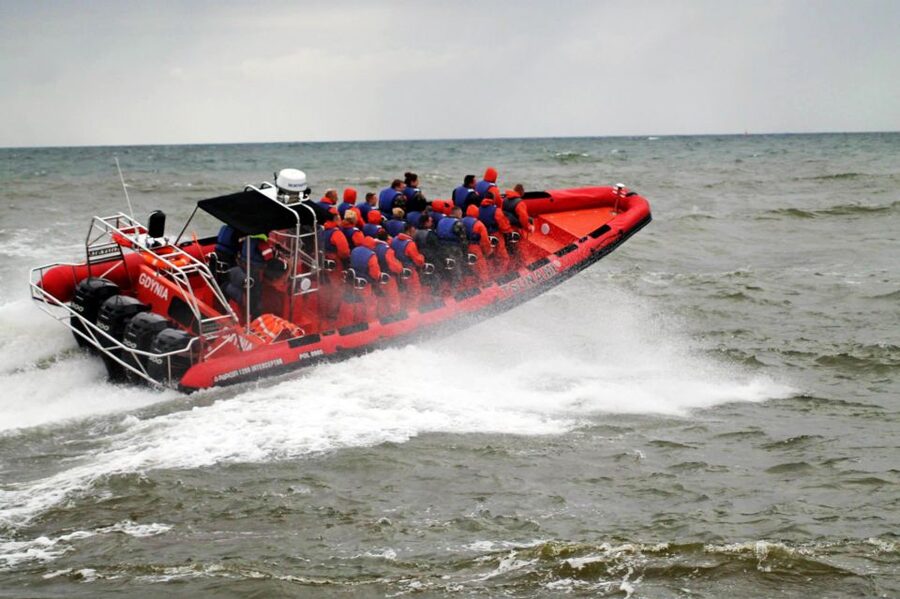
A small RIB can get you close to Reykjavík’s marine life without putting you on a crowded boat deck. The fast ride takes you from the Old Harbor past Engey and Lundey, then out toward the whale grounds in Faxaflói Bay, where humpback and minke whales, dolphins, and porpoises may appear.
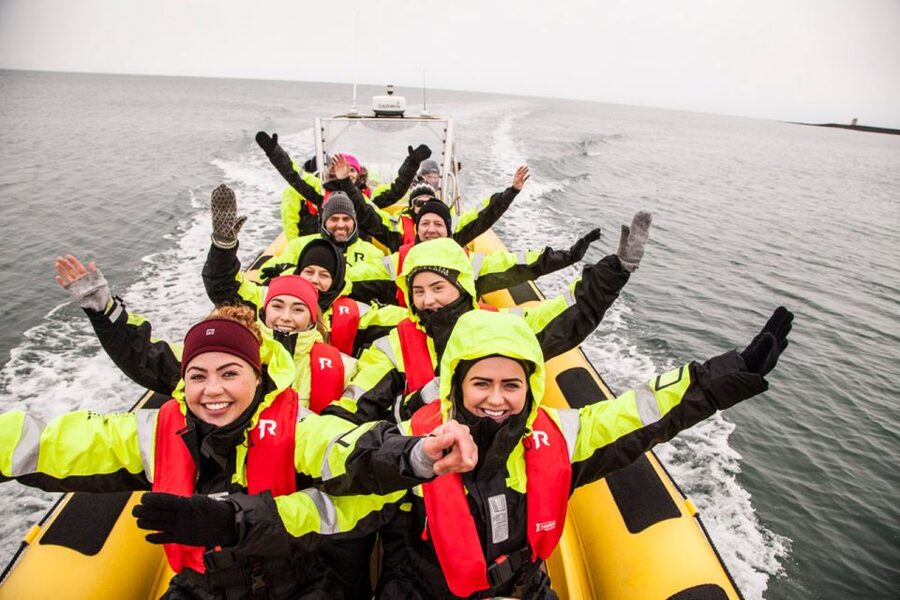
I like the 12-seat boat, which gives the guide a better chance to keep everyone involved when an animal surfaces. I also like the warm flotation-style overalls, gloves, and goggles, since Iceland’s wind can turn a pleasant outing into a cold one quickly.
The catch is the ride itself: it can be bumpy, windy, and hard on anyone with a bad back. At $200 per person, this is not a casual harbor cruise, and wildlife sightings are never promised, though you get a free return ticket if the sea stays empty.
Key details before you book
- Three species in one outing: Humpback and minke whales, white-beaked dolphins, harbour porpoises, puffins, and other seabirds have all been seen on this route.
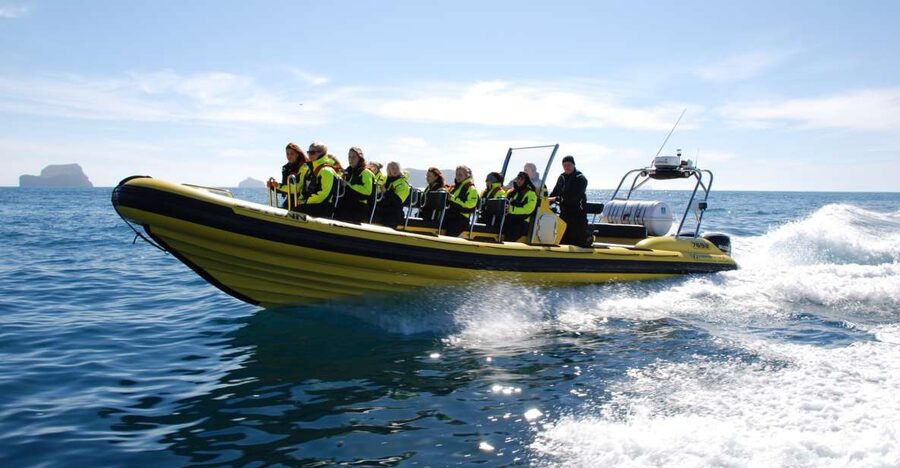
- A genuinely small group: The RIB carries up to 12 people, giving you more room and a closer view than a large sightseeing vessel.
- A fast trip to the whale grounds: The boat may spend about half an hour reaching the main viewing area, leaving valuable time for watching animals before the return journey.
- Warm gear is provided: You receive overalls, gloves, goggles, and safety equipment, but you should still dress warmly and bring comfortable shoes.
- Weather controls the schedule: The captain decides if conditions are safe and comfortable, and a RIB departure can be replaced or rescheduled if wind and waves are too strong.
- A free second chance: If no wildlife appears, you receive a complimentary ticket for another attempt.
Leaving Reykjavík’s Old Harbor by RIB
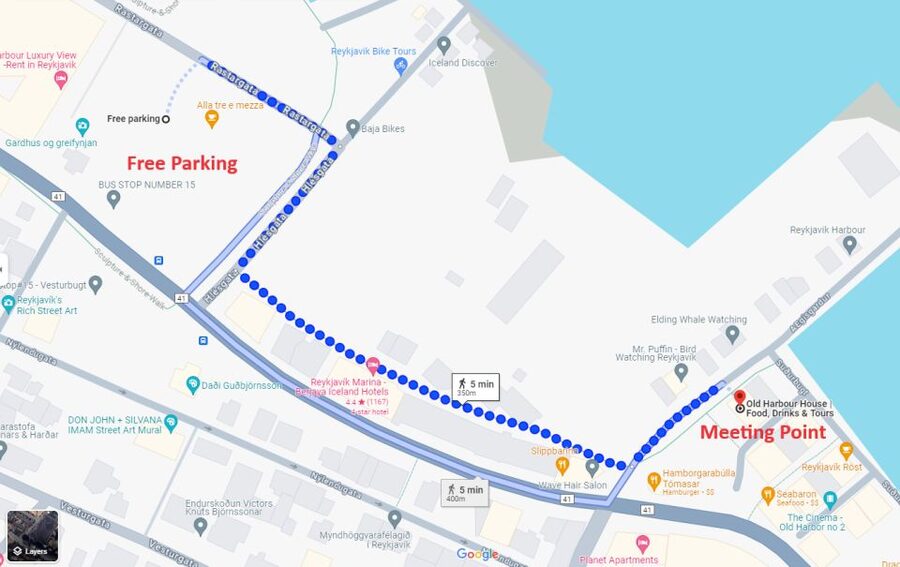
Your outing begins at Old Harbour House on Ægisgarður 2, near Reykjavík’s waterfront. Check in 30 minutes before departure by scanning the bar code or QR code on your ticket at the self-service kiosk.
That early arrival matters. You need time to collect the provided overalls, gloves, goggles, and safety equipment before walking to the boat. If you have extra layers or a small bag, the reception area can hold them while you are at sea, according to the practical arrangements described for the tour.
Once seated in the 12-seat RIB, you get a quick introduction to the ride and safety procedures. This is not a sit-back-and-sip-coffee boat. Passengers half-sit and half-stand on the padded seats to soften the impact as the RIB meets the water, especially when the bay is choppy.
The first few minutes offer a fun burst of speed as Reykjavík drops behind you. From the water, the city looks different. Harpa concert hall is one of the clearest landmarks, and the changing angle gives you a broad view of the waterfront rather than the usual street-level scene.
The speed is part of the appeal, but it also creates the main physical challenge. Wind hits your face even when the air temperature seems mild, so I would bring a neck covering and make sure your ears are protected if you are sensitive to cold air. The provided goggles help with wind, spray, and keeping your eyes open while the boat moves quickly.
More Whale Watching in Reykjavik
- Reykjavík: Whale Watching and Marine Life Cruise
★ 4.6 · 9,838 reviews - Reykjavík: Whale Watching Cruise on the Amelia Rose Yacht
★ 4.5 · 2,911 reviews - The Original Classic Whale Watching from Reykjavik
★ 4.5 · 2,626 reviews
Engey and Lundey, the islands near Reykjavík
The route passes among the small islands of Faxaflói Bay, including Engey, the second-largest island in the Kollafjörður area. It is a useful reminder that Reykjavík’s waterfront is not just a city harbor. Within a short time, you are looking across open water toward low, uninhabited islands and the coast.
Lundey is the smaller island with the more memorable name. In Icelandic, Lundey means Puffin Island, and it is a known place to look for puffins and seabirds. The boat may visit this area on the way back, after the main whale search, so you can get a second kind of wildlife viewing before returning to the harbor.
Puffins are seasonal, and the timing matters. Sightings in April can be excellent, with one outing producing hundreds of puffins, while late summer trips can catch the end of the puffin season. By October, you should think of puffins as a bonus rather than a central promise.
The islands also add variety to the trip. If the whales are slow to appear, you are not simply staring at empty water for two hours. You have Reykjavík’s shoreline, island scenery, seabirds, and the changing view of Faxaflói to keep your attention moving.
Searching Faxaflói Bay for whales and dolphins
The main purpose of the trip is to reach the feeding areas off Reykjavík’s coast. The RIB’s speed lets the captain cover a good stretch of water, and the small boat can change direction quickly when a blow or a group of dolphins appears in the distance.
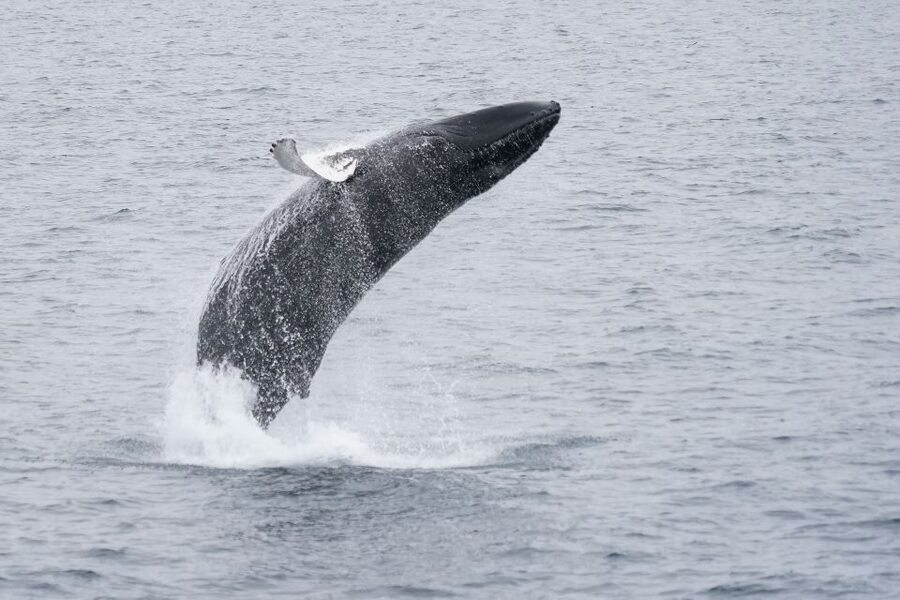
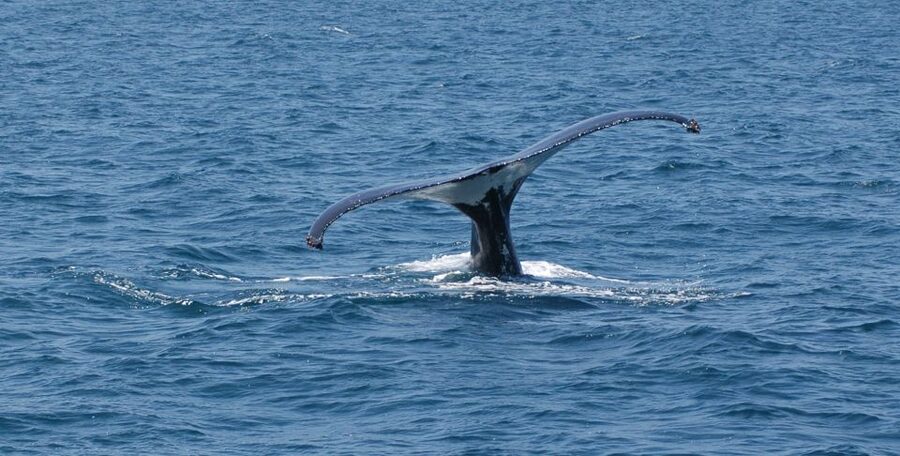
Humpback whales are the most dramatic possibility. The best encounters described on this route include several humpbacks surfacing near the boat, tail slaps, repeated blows, and even breaches. One strong day produced at least a dozen humpbacks, while other outings recorded four, six, seven, or around ten whales.
You should keep your expectations in check. Wildlife moves freely, and no captain can order a whale to surface beside the boat. Some departures produce multiple species, while another may find puffins but no whales. The free return ticket softens that risk, but only if you have another day available in Reykjavík.
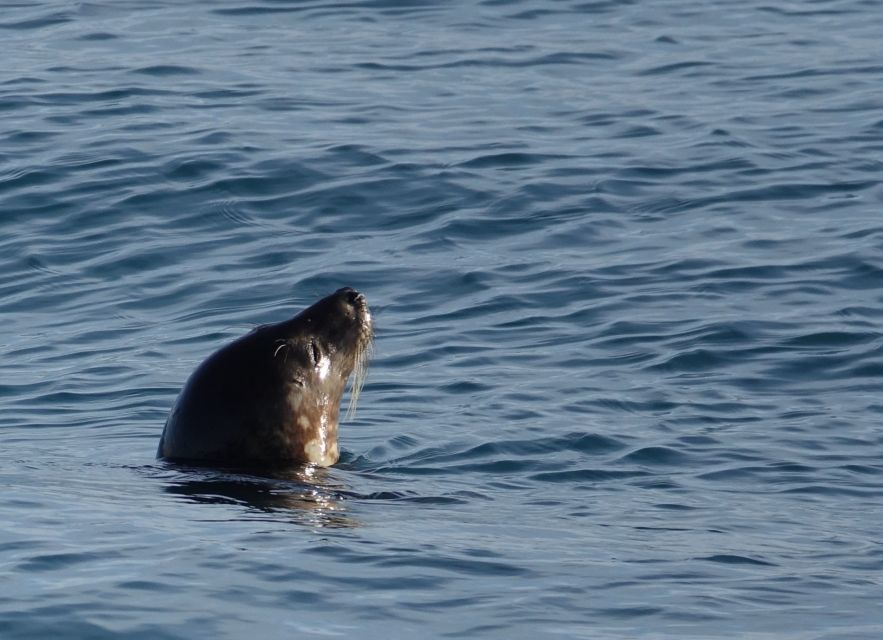
Minke whales are another regular possibility. They are generally smaller and can surface more briefly, so you may need to stay alert. Dolphins can be easier to spot when they travel in groups, and white-beaked dolphins have been seen close to the boat in playful pods.
Harbour porpoises are also possible, though their smaller size and quick movements make them harder to notice. The guide helps identify what you are seeing and explains the difference between a whale blow, a dolphin group, and a fleeting porpoise.
One useful point about the RIB is its scale. A large vessel may carry many more people, with animals appearing far away beyond the railings. Here, the guide can direct your attention quickly and the captain can reposition the boat with less fuss. That does not guarantee a close sighting, but it improves the odds of making good use of a brief surfacing.
There is one small practical weakness. With engine noise, wind, and excited passengers, you may not always hear exactly where the captain or guide wants you to look. Keep watching the water, listen for direction, and be ready to turn quickly when the group spots a blow.
The guides and the quality of the outing
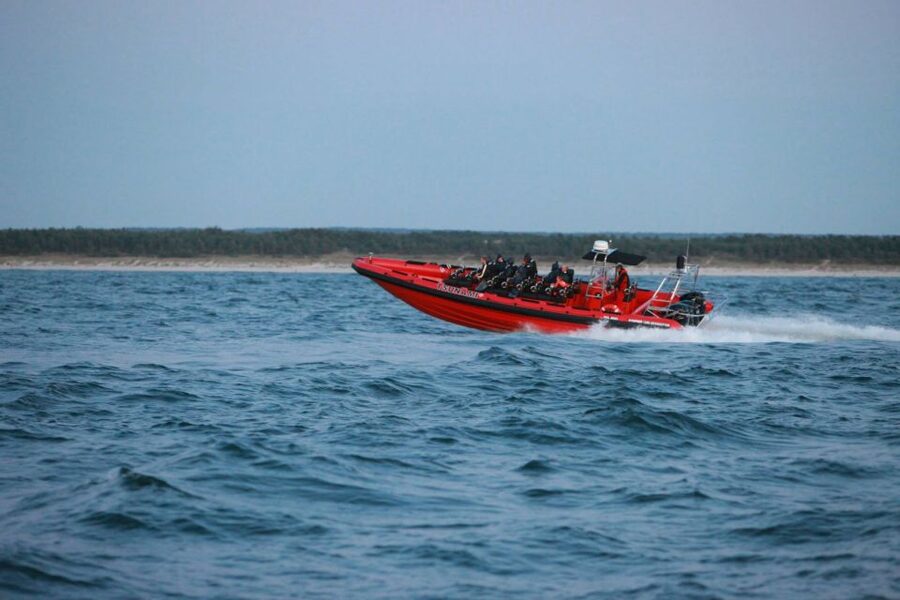
The human side of this trip matters. Guides named Claudia, Klaudia, Julian, Julien, and Bianca have led departures, and the strongest feedback consistently focuses on their enthusiasm, marine knowledge, and ability to answer questions clearly.
Julian has been described as a French marine biologist, while other guides have offered detailed explanations of whales and marine biodiversity. That kind of background adds value during the quiet stretches, when the boat is moving between sightings rather than sitting beside an animal.
A good guide also keeps the mood calm when the weather is not perfect. One departure had poor conditions but still found several humpbacks. Another guide helped a nervous passenger feel safe, while a captain kept searching long enough to find a minke whale near Reykjavík Harbor.
The captain’s judgment is just as important as the guide’s commentary. The company says sailing depends on suitable conditions, and the captain makes the call with passenger safety and comfort in mind. That means a RIB departure can be changed at short notice when wind and waves become unsuitable.
On some occasions, the RIB has been canceled close to departure and passengers offered a larger boat instead. That substitute is slower and does not provide the same thrilling ride or small-group feel, but it may still reach the whales. In cold, windy weather, the slower boat can also be the more comfortable option.
Same base, a completely different sort of day out:
- Reykjavik: Golden Circle Full-Day Tour with Kerid Crater
★ 4.8 · 24,485 reviews - Reykjavik Food Walk – Local Foodie Adventure in Iceland
★ 5.0 · 18,952 reviews - Iceland: Northern Lights Bus Tour from Reykjavik
★ 4.1 · 11,161 reviews - Reykjavík: South Coast Waterfalls, Black Sand & Glacier Tour
★ 4.8 · 11,030 reviews
Two hours, with useful limits
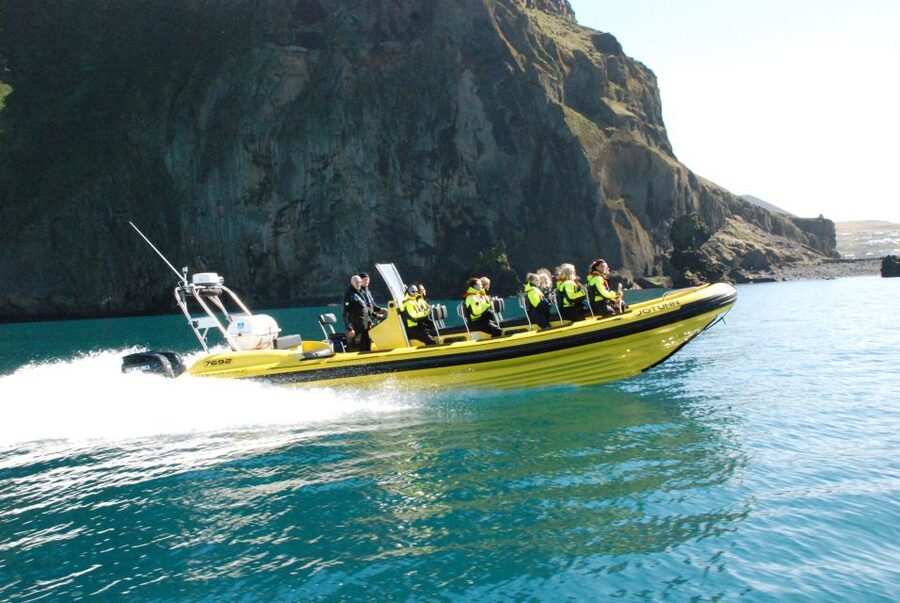
The advertised duration is two hours, but the structure of those two hours is important. The boat may take roughly 30 minutes to reach the main wildlife area, followed by around 45 minutes watching whales and dolphins, then a return route that can include about 10 minutes near Lundey.
That timing explains why some people wish the trip were longer. When whales are active, the return journey can feel early, especially after spending time reaching them. Still, the fast RIB makes it possible to cover a broad area within the two-hour window.
The trip is best treated as a focused wildlife outing with a scenic speedboat ride, not a slow educational cruise. You get city views at the start, open-water searching in the middle, and islands and seabirds near the end.
The 12-seat capacity can work in your favor. Even when only four people were booked, the boat still went out on one departure rather than canceling. The minimum number of participants can affect scheduling, however, so check your confirmation and keep some flexibility in your plans.
Is $200 a fair price?
At $200, this is expensive even by Icelandic standards. The price makes more sense if you care about the small boat, the fast ride, the supplied cold-weather gear, and the chance to cover more water than a slower harbor vessel.
You are paying for more than a whale sighting. The outing includes Reykjavík from the sea, the islands of Faxaflói, a guide, a captain, safety equipment, and the excitement of traveling in a RIB. If you see several humpbacks plus dolphins and puffins, the experience can feel like one of the major events of your visit.
The value is weaker if you dislike bumpy rides or if you have only one narrow time slot. A free repeat ticket has real value for someone staying several days, but it does little for you if the sea is empty on your final morning.
I would compare this with your priorities rather than with the cheapest available boat. Choose the RIB if a close, active, small-group experience matters more than a stable ride and indoor comfort. Choose another format if you want to stay dry, move gently, or avoid the physical strain of a fast boat.
Who should choose this RIB trip?
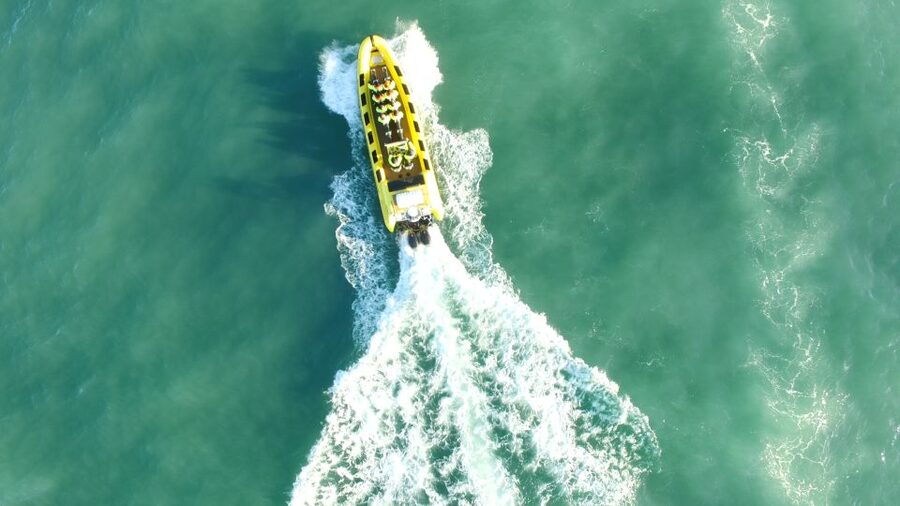
This outing suits adults and children aged 10 or older who enjoy speed, open water, and the possibility of sudden wildlife action. It is particularly good for a first whale-watching trip, since the guide explains what you are seeing and the boat gives you more than a standard city harbor view.
It also suits photographers who want a more personal position near the water. Bring your camera, but protect it from spray and keep one eye on the sea rather than watching the whole trip through a screen. The best moments can last only a few seconds.
I would not choose this for anyone with back problems, pregnant passengers, or people shorter than 145 centimeters, or 4 feet 8 inches. The seating and movement require physical stability, and the boat can be rough when the wind rises.
Anyone prone to seasickness should think carefully. Even in decent weather, some people have felt sick, and the ride is bumpy by design. Take the supplied clothing seriously, wear comfortable shoes, and add warm layers underneath rather than assuming the overalls solve every cold-weather problem.
The best season for whale watching in Iceland is April through September. April can bring puffins and whales, while summer has produced particularly strong humpback sightings. October can still be rewarding for whales and dolphins, but conditions may be colder and less predictable.
Practical booking advice for Reykjavík
Plan to arrive at Old Harbour House 30 minutes before departure at Ægisgarður 2, 101 Reykjavík. There is no hotel pickup or drop-off, so you need to make your own way to the harbor.
If you drive, use the supplied parking information to find the nearest free parking area. Allow time to walk to check-in and scan your ticket at the kiosk rather than arriving at the boat at the last minute.
The tour is conducted in English. You can cancel up to 24 hours before departure for a full refund, and the reserve-now, pay-later option lets you keep your plans flexible.
Check the forecast before you leave, but remember that the captain has the final call. A cancellation or change is not necessarily a sign of poor organization. In Iceland, wind and wave conditions can shift quickly, and a safe substitution on a larger boat may be preferable to an uncomfortable RIB ride.
Should you book it?
Book this tour if you want the most exciting whale-watching option from Reykjavík and you are comfortable with wind, bumps, and a little uncertainty. The small boat, quick handling, warm gear, and strong guide team give you a good setup for seeing humpbacks, minke whales, dolphins, porpoises, and puffins.
Skip it if you need a smooth, dry ride, have back or mobility concerns, or cannot use a repeat ticket if the animals stay away. At $200, the decision depends on how much you value the RIB experience itself.
For most able-bodied visitors with at least two days in Reykjavík, I think it is a strong choice. Build in a little schedule flexibility, dress for cold wind, and watch the water closely. That is when the trip has its best chance of turning a fast boat ride into a memorable encounter with Icelandic wildlife.
FAQ
Where does the whale-watching RIB tour depart from?
The tour departs from Old Harbour House at Ægisgarður 2, 101 Reykjavík.
How early should I arrive?
You should check in 30 minutes before departure.
How do I check in?
Scan the bar code or QR code on your ticket at the self-service kiosk inside Old Harbour House.
How long is the tour?
The tour lasts two hours.
How many people fit on the RIB boat?
The RIB has space for 12 passengers.
What wildlife might I see?
Possible sightings include humpback whales, minke whales, dolphins, harbour porpoises, puffins, and other seabirds.
Are wildlife sightings guaranteed?
No. Wildlife sightings cannot be guaranteed. If you see nothing, you receive a complimentary ticket to try again another day.
What clothing and equipment are included?
The tour provides warm overalls, gloves, goggles, and necessary safety equipment.
Is hotel pickup included?
No. You must make your own way to the Old Harbor meeting point.
Who should not take this tour?
The tour is not suitable for children under 10, pregnant women, people with back problems, or anyone under 145 centimeters, or 4 feet 8 inches.
Just added around Reykjavik
- Northern Lights Private Tour from Reykjavik★ 5.0 · 3 reviews
- Private South Coast Tour: A Journey to Iceland’s Stunning Shore★ 4.5 · 3 reviews
- Golden Circle Private Tour Tomato Soup Lunch and Secret Lagoon with Photography★ 5.0 · 3 reviews
- Hot and cold G spots challenge★ 5.0 · 3 reviews
- Personalised Travel Plan and itinerary for Iceland★ 4.5 · 3 reviews
- Authentic Reykjavik Food Tour with Flea Market Delights★ 4.2 · 3 reviews
- Blue lagoon Premium and Private Golden circle tour★ 5.0 · 3 reviews
- Exclusive Westman Islands Adventure – A Private Day Tour★ 5.0 · 3 reviews
Reykjavik Tours, compared.

Golden Circle Full-Day Tour with Kerid Crater
Read our review →
Reykjavik Food Walk – Local Foodie Adventure in Iceland
Read our review →

South Coast Waterfalls, Black Sand & Glacier Tour
Read our review →
Sky Lagoon Entrance Pass With 7-Step Spa Ritual
Read our review →
Iceland South Coast Full Day Small-Group Tour from Reykjavik
Read our review →Browse the lists this tour appears in