
Reviewed · VOLCANO TOURS
Volcano Movie – Experience the Latest Eruptions in Iceland
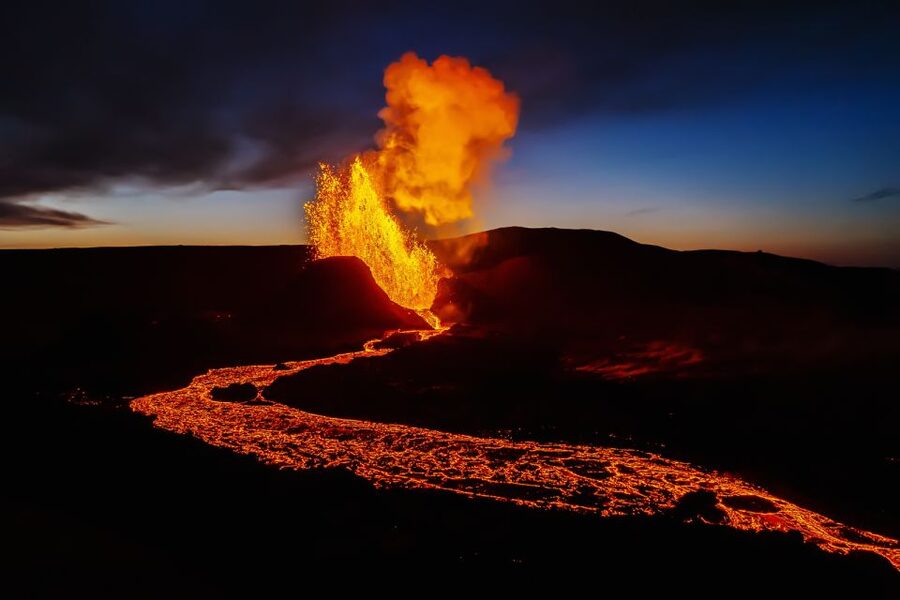
The most striking part of this cinema experience is the chance to see Iceland’s recent eruptions in sharp 4K footage, with the fire, smoke, ash, and moving lava doing the talking. The film covers Eyjafjallajökull, Holuhraun, Grímsvötn, and the Fagradalsfjall eruption series, giving you a quick visual lesson in why this island keeps making news.
I like the silent presentation, which lets the eruption sounds carry the story, and I like the clear sweep from older events to modern ones. The drawback is just as clear: with no voice-over, you need to read the free earthquake and volcano information at the entrance if you want more explanation.
Key points
- 4K footage of Iceland’s newest eruptions, including Fagradalsfjall and Holuhraun.
- A quick tour through Icelandic eruption history, beginning with Katla in 1918.
- Eyjafjallajökull in 2010, the eruption that halted air traffic across Europe.
- No narrator or spoken commentary, only video and eruption sounds.
- Convenient Hvolsvöllur location, on the left when arriving from Reykjavík or the Golden Circle.
- A low $16 price, with free volcano and earthquake information at the entrance.
A front-row view of Iceland’s volcanic power
Iceland has an eruption, on average, every four or five years. That statistic sounds calm on paper. The film makes it feel much less calm.
At LAVA Centre in Hvolsvöllur, you watch footage of eruptions in the best available quality, shot in 4K or better. This matters because volcanic activity is all about motion and texture: glowing rock crawling forward, ash rising into the sky, ice meeting heat, and the ground changing shape.
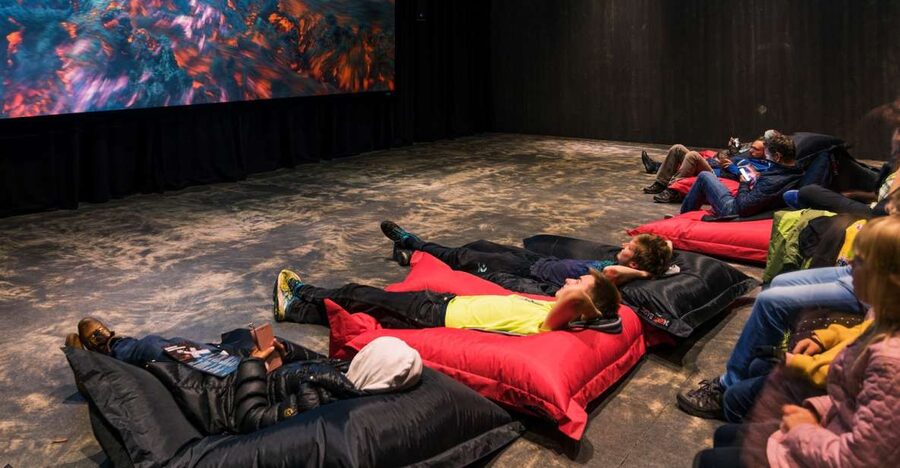
You are not joining a hike to an active volcano. You are entering a cinema for a film presentation. That makes this a useful stop when weather, road conditions, or limited time keep you from seeing volcanic activity in person.
The film is designed as a visual story. There is no voice-over, and no guide provides a running explanation during the screening. Instead, you get video and natural sound. The effect is direct and uncluttered, but you should know what you are choosing. If you prefer a narrated documentary, this may feel spare. If you want to watch the eruptions without someone talking over them, the format works well.
More Volcano Tours in Iceland:
- Golden Circle with Kerid Volcanic Crater Day Tour from Reykjavik
★ 4.5 · 2,826 reviews - Golden Circle, Volcano Crater and Blue Lagoon Small-Group Tour
★ 5.0 · 1,932 reviews - Ice Cave by Katla Volcano Super Jeep Tour from Vik
★ 4.5 · 1,100 reviews
From Katla in 1918 to Fagradalsfjall
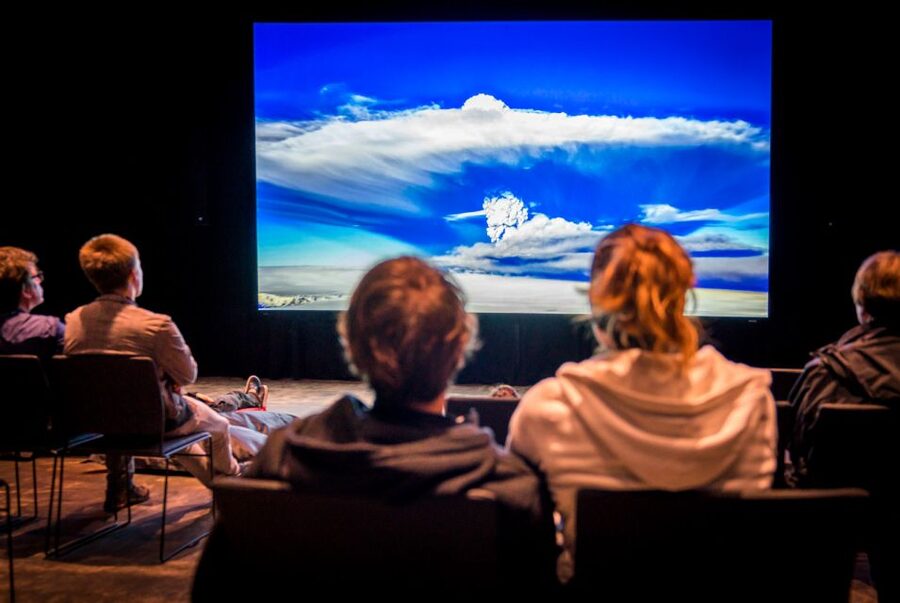
The film begins with a short historic overview. It starts with the Katla eruption in 1918, then moves through Hekla in 1947, Askja in 1961, Surtsey in 1963, the Westman Islands in 1973, and Krafla in 1975.
This opening gives you a useful sense of time. Iceland’s volcanic story is not one isolated spectacle. Eruptions have shaped communities, roads, farms, coastlines, air travel, and the way people live on the island.
The early section is also helpful if you are visiting several volcanic sites. You may have seen names such as Hekla, Askja, Katla, or Surtsey on maps and road signs without knowing why they matter. The film places those names into a single timeline.
Surtsey is especially notable because it represents new land forming from an eruption. The Westman Islands eruption, meanwhile, shows how quickly volcanic activity can affect a settled community. The film includes these events as part of a wider story rather than treating the 2010 eruption as Iceland’s only important one.
You should not expect a long lecture on each event. The historic section is an overview, not a full museum course. The free information at the entrance helps fill in some of that background before or after the film.
Eyjafjallajökull and the eruption that stopped European flights
The 2010 sequence is likely the section most familiar to international visitors. The Fimmvörðuháls eruption came first, followed by the Eyjafjallajökull eruption.
Eyjafjallajökull became famous because ash clouds disrupted air traffic across Europe for days. The event was a reminder that an eruption in a remote Icelandic area can have effects far beyond the island itself.
The film helps you connect the news story with the physical event. Instead of hearing only about canceled flights and closed airports, you see the force behind them. The scale of ash and fire becomes easier to understand when you watch it in high-quality footage.
This section is particularly useful if you plan to visit the South Coast, where Eyjafjallajökull is part of the region’s volcanic identity. The movie does not replace seeing the mountain itself, but it gives you context for what happened there.
A practical note: the name can be difficult to pronounce, and the film does not appear to be built around a spoken lesson. Use the entrance information to get comfortable with the key names before you sit down. Icelandic volcano names stop looking quite so intimidating once you see how often they appear on maps and signs.
Grímsvötn and the little-known Holuhraun eruption
The film then turns to Grímsvötn in 2011 and Holuhraun from 2014 to 2015.
Holuhraun is an interesting inclusion because it was a huge eruption that received less worldwide attention than Eyjafjallajökull. You get to see that Iceland’s volcanic activity is not limited to the events that interrupt international news.
The Holuhraun footage also adds scale to the film’s story. The eruption continued over a long period, and its size helps you understand how much volcanic force can be released in Iceland without creating the same immediate public disruption as an ash-producing eruption near air routes.
This is one of the film’s useful qualities: it is not only a collection of famous images. It also points you toward eruptions you may not know well. That makes the screening worthwhile for someone who has already read about Eyjafjallajökull but wants a broader view.
Still, you should keep your expectations measured. The available information does not promise a detailed scientific explanation of every eruption. Think of the film as a powerful visual introduction, then use the free material at the entrance for extra facts about earthquakes and the major volcanoes around LAVA Centre.
Same base, a completely different sort of day out:
- Reykjavik: Golden Circle Full-Day Tour with Kerid Crater
★ 4.8 · 24,485 reviews - Reykjavik Food Walk – Local Foodie Adventure in Iceland
★ 5.0 · 18,952 reviews - Iceland: Northern Lights Bus Tour from Reykjavik
★ 4.1 · 11,161 reviews - Reykjavík: South Coast Waterfalls, Black Sand & Glacier Tour
★ 4.8 · 11,030 reviews
The latest eruptions at Fagradalsfjall
The final part covers the recent eruptions at Fagradalsfjall, also called Fagradalseldar for the series of eruptions.
These events are especially relevant if you are visiting Iceland now and have seen current volcanic news, maps, or road updates. The film gives you a way to understand the activity as part of an ongoing series rather than as one isolated burst of lava.
The footage lets you compare the newer eruptions with the earlier events shown at the start. You can see how different eruptions have different effects, from dramatic ash clouds to slow-moving lava flows. That comparison is more valuable than simply watching one spectacular clip after another.
For me, the recent footage is the main reason to choose this screening over a general volcano documentary. It connects Iceland’s past with the volcanic activity that has shaped recent travel plans and news reports.
The exact screening start time is not provided in the activity details, so check availability when you book. The ticket is valid for one day, but that does not mean the movie runs continuously at every hour. Build the screening into your route rather than assuming you can walk in at any moment.
Why the no-narration format matters
A film without voice-over can be either a strength or a weakness.
I like the fact that you hear the eruption itself. Natural sound gives the footage room to work. The rumble, crackle, and movement of lava are more immediate when they are not competing with a presenter’s voice.
The downside is that the film may leave you with questions. You might want to know why one eruption produced ash while another produced flowing lava, or how close people were to the event. The available information does not say that the film answers those questions in detail.
That is why I would arrive a little early and read the free information about Icelandic earthquakes and the major volcanoes surrounding LAVA Centre. It gives you basic context before the movie begins. You can also use the material afterward to make sense of the names and dates you have just seen.
The language issue is simple. The host or greeter service is available in English and Icelandic, but the film itself has no vocal narrative. You should not book this expecting an English-speaking guide to explain every scene.
Location and planning your Hvolsvöllur stop
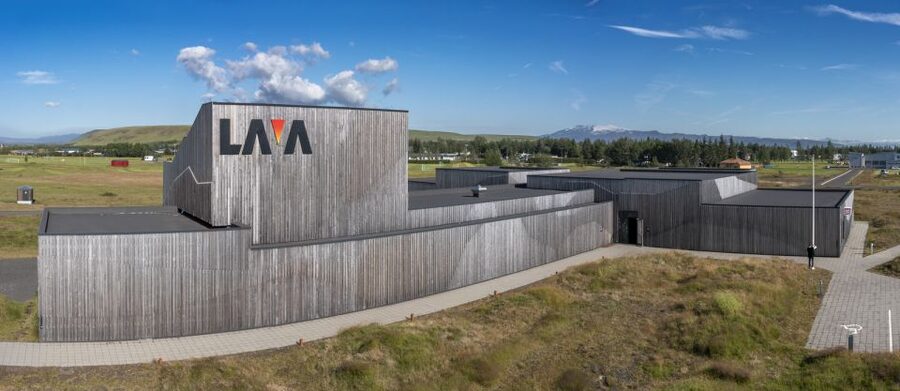
The meeting point is LAVA Centre, Austurvegur 14, 860 Hvolsvöllur. When you arrive from Reykjavík or from the Golden Circle, it is the first building on the left. The directions are deliberately simple, and the building should be easy to identify.
This location makes the film a natural addition to a South Coast driving day. You can use it as a weather-proof stop before continuing toward other sights in the region. Since the booking lasts one day, you have some flexibility in placing it within your schedule, but you still need to check the available start times.
The cinema admission does not include food. You can buy food at Katla, the in-house restaurant and shop, so you do not need to leave the building if you need a meal or a snack. Food and drinks are not allowed in the cinema itself.
The activity is wheelchair accessible. That is useful for visitors who want a volcanic presentation without walking over rough ground or taking an outdoor route.
What $16 gets you
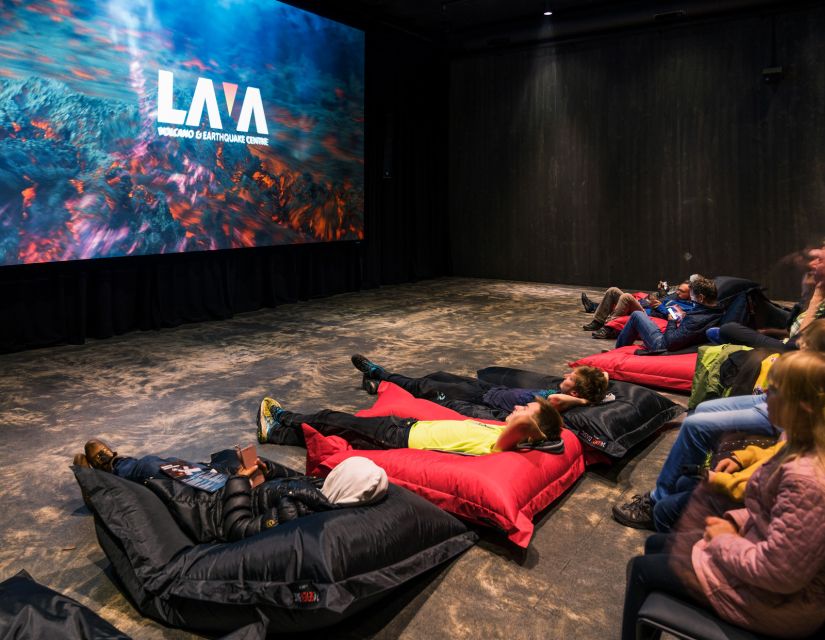
At $16 per person, this is a modestly priced attraction by Iceland standards. You are paying for cinema admission, not a full museum visit, guided excursion, or transport service.
The value depends on how you use it. If you want a short, focused look at Iceland’s eruptions, the cost is reasonable. You get high-quality footage covering more than a century of eruptions, including several events that are difficult or impossible to see safely in person.
The price is less convincing if you expect a long educational program with a narrator, demonstrations, or a detailed science presentation. The film’s strength is its visual quality and subject, not a large number of included extras.
I would consider it good value for a rainy day, a family stop, or a visitor who wants more volcanic context before touring South Iceland. It is also a sensible choice if you are fascinated by the Fagradalsfjall eruptions but cannot visit an active eruption area yourself.
One verified German comment described the presentation as interesting and entertaining. That matches the format well: this is meant to hold your attention through striking footage rather than through a dense spoken lesson.
Who should see Volcano Movie at LAVA Centre?
You should consider booking this if you want:
- A clear visual introduction to Iceland’s volcanic past and present.
- Eyjafjallajökull footage connected to the 2010 air-traffic shutdown.
- A look at Holuhraun, Grímsvötn, and Fagradalsfjall in one sitting.
- A weather-proof stop near the South Coast.
- A wheelchair-accessible activity with English and Icelandic staff available.
- A low-cost attraction that fits around a driving itinerary.
You may want to skip it if you need a fully narrated documentary or if you already plan to spend substantial time at a larger volcano exhibition and want something more interactive. The film gives you images and sound, while the entrance material supplies extra reading.
Should you book this volcanic film?
Book it if the idea of seeing Iceland’s eruptions in 4K appeals to you and you are passing through Hvolsvöllur. The combination of famous events, lesser-known Holuhraun footage, and recent Fagradalsfjall activity gives the film a useful range.
I would especially recommend it as a short South Coast stop on a day when outdoor plans are uncertain. Just remember that this is a cinema experience, not a guided volcano visit. Read the free information at the entrance, check the screening time, and arrive expecting a visual presentation with no voice-over. For $16, that is a fair way to get closer to Iceland’s restless ground without putting on hiking boots.
FAQ
Where is the Volcano Movie shown?
It is shown at LAVA Centre, Austurvegur 14, 860 Hvolsvöllur, in Iceland’s Southern Region.
How do I find LAVA Centre from Reykjavík or the Golden Circle?
It is the first building on the left when coming from Reykjavík or the Golden Circle.
How much does admission cost?
Admission costs $16 per person.
How long is the activity?
The activity is listed as valid for one day. Check availability for the movie’s starting times.
Does the film have a voice-over?
No. The presentation uses video and sound only and has no vocal narrative.
What quality is the eruption footage?
The footage is shown in 4K or better, described as the highest possible quality.
Which eruptions are included?
The film includes historic eruptions such as Katla, Hekla, Askja, Surtsey, the Westman Islands, and Krafla. It also covers Fimmvörðuháls, Eyjafjallajökull, Grímsvötn, Holuhraun, and the recent Fagradalsfjall eruption series.
Is food included?
No. Food is not included, but you can buy food at Katla, the in-house restaurant and shop.
Can I bring food or drinks into the cinema?
No. Food and drinks are not allowed inside.
Is the cinema wheelchair accessible?
Yes. The activity is wheelchair accessible.
Just added around Iceland
- From Reykjavik: Private Golden Circle Tour in Iceland★ 5.0 · 3 reviews
- Northern Lights Private Tour from Reykjavik★ 5.0 · 3 reviews
- Exclusive Ice Climbing Experience on Sólheimajökull★ 5.0 · 3 reviews
- Private South Coast Tour: A Journey to Iceland’s Stunning Shore★ 4.5 · 3 reviews
- Easy Hike on Sólheimajökull glacier★ 5.0 · 3 reviews
- Golden Circle Private Tour Tomato Soup Lunch and Secret Lagoon with Photography★ 5.0 · 3 reviews
- Hot and cold G spots challenge★ 5.0 · 3 reviews
- Authentic Reykjavik Food Tour with Flea Market Delights★ 4.2 · 3 reviews
Volcano Tours, compared.
Golden Circle with Kerid Volcanic Crater Day Tour from Reykjavik
Read our review →
Golden Circle, Volcano Crater and Blue Lagoon Small-Group Tour
Read our review →
Ice Cave by Katla Volcano Super Jeep Tour from Vik
Read our review →
Volcano Eruption Site and Reykjanes Hiking Tour
Read our review →
Guided Afternoon Hiking Tour to New Volcano Site
Read our review →
Golden Circle and Kerid Volcanic Crater Small-Group Day Tour
Read our review →
Browse the lists this tour appears in