
Reviewed · REYKJAVIK TOURS
Saga Museum – Entrance ticket
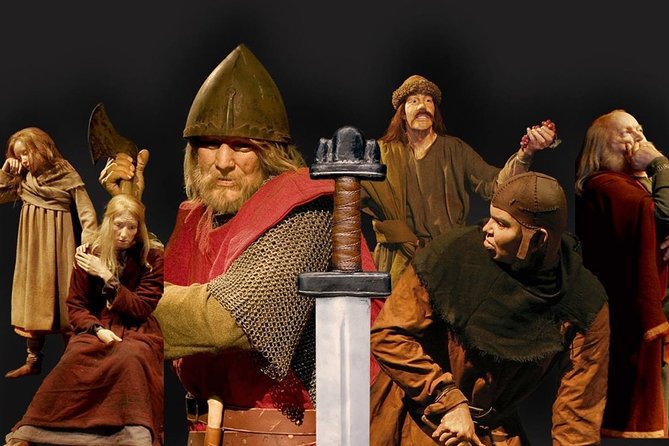
The most striking part of the Saga Museum is its lifelike, full-size figures. Instead of reading rows of text, you walk past scenes drawn from Icelandic sagas and early settlement, with faces and poses that make the stories easier to picture. Some children may find the realistic eyes and grim scenes a little intense.
I like the audio guide in seven languages, especially because it lets you move at your own pace. I also like the chance to dress as a Viking and handle replica weapons and armor, which gives families something to do beyond listening. The main drawback is scale: this is a compact museum, so visitors expecting a large collection of archaeological objects or modern multimedia displays may finish sooner than expected.
Key points to know before you go
- Lifelike saga scenes: Roughly 18 to 20 displays use highly realistic figures to show major moments and people from Iceland’s early story.
- Several audio choices: Follow the museum in English, Icelandic, French, German, Russian, Spanish, or Swedish.
- Leif Eiriksson and Snorri Sturlusson: Meet famous names from exploration, settlement, literature, and Icelandic tradition.
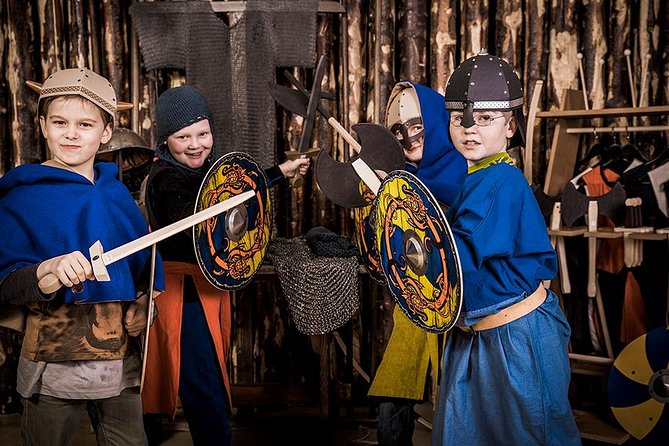
- Hands-on Viking fun: Try clothing, armor, and weapons, making this a good short stop for families.
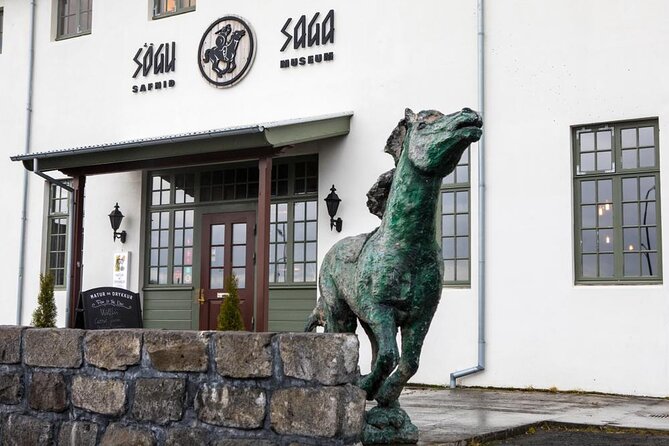
- Old harbour setting: The museum is in Reykjavik’s harbour area, close to public transportation and with free parking.
- Short, flexible visit: Many people finish in about 30 to 45 minutes, but you can take up to two hours if you listen carefully and spend time with the displays.
Walking into Iceland’s saga world
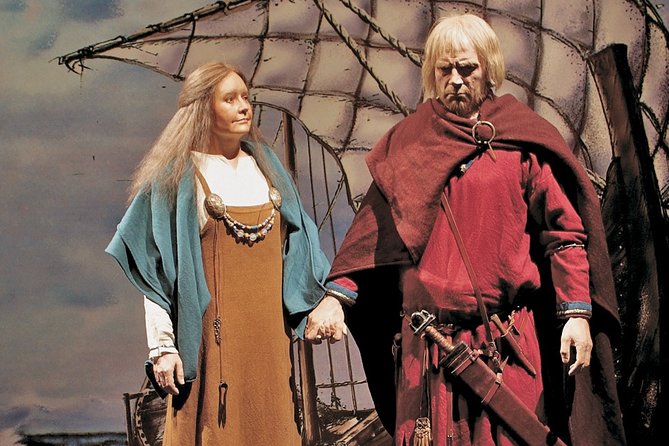
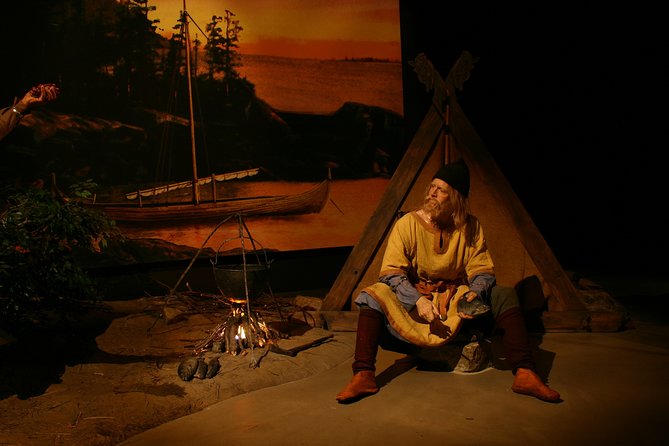
The Saga Museum presents Iceland’s past through scenes rather than a conventional gallery of objects. Its figures show people associated with the Icelandic sagas, including Leif Eiriksson, known as Leif the Lucky, the poet and historian Snorri Sturlusson, and Ingolfur Arnarson, traditionally regarded as Iceland’s first permanent settler.
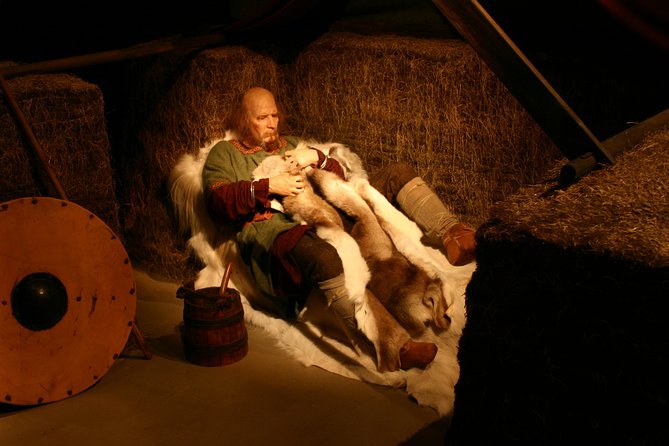
That approach works well for you if names and dates tend to blur together. A person standing in a room, wearing period clothing and placed in a carefully built scene, gives the story a clear shape. The displays are static, but the figures are made with such care that they can feel almost alive.
The tone is not limited to heroic Viking adventure. You also learn about hardship, conflict, settlement, and the Black Death, one of the most devastating pandemics in human history. The museum connects Iceland’s early story to wider events, showing that life on this remote island was shaped by more than voyages and battles.
The museum currently presents about 20 exhibits, though some descriptions refer to roughly 18 displays. That small difference does not change how you plan the visit. Think of it as a focused walk through selected episodes, not a full museum day.
More museums in Reykjavik:
- Reykjavik: Perlan Museum Wonders of Iceland Entrance Ticket
★ 4.7 · 2,575 reviews - Reykjavík: Hop-On Hop-Off Bus and Perlan Museum Entry Ticket
★ 4.3 · 719 reviews - Reykjavik: Whales of Iceland Museum Entrance Ticket
★ 4.4 · 493 reviews
How the audio guide shapes your visit
You can take an audio device and follow the explanations as you move from display to display. English is available, along with Icelandic, French, German, Russian, Spanish, and Swedish. An audio booklet can also be purchased at the front desk if you prefer to read rather than listen.
I like this self-guided format because you are not tied to a group’s pace. You can pause at a scene, replay an explanation, or move on when a topic has had its say. That flexibility matters in a small museum, especially when children are ready to move faster than adults.
The audio portion can take about 30 minutes if you keep moving. Give yourself closer to an hour if you want to listen carefully, look at each figure, and discuss what you are seeing. The advertised visit length is about one to two hours, but many people will find 45 minutes is enough for a solid overview.
You should not expect a live guide leading you from room to room. The museum’s storytelling comes through the recorded narration and the displays themselves. That makes the visit easy to fit around other Reykjavik plans, but it also means you will need to pay attention to the audio to get the full story.
The figures make the past easier to picture
The museum’s strongest feature is its lifelike presentation. The figures are arranged in scenes, giving you a visual sense of how people may have lived, fought, traveled, or gathered. This is similar in spirit to a wax museum, but the purpose here is education rather than celebrity display.
The realistic faces are a big reason the exhibits appeal to children. They also create one caution: younger children may feel uneasy when they first enter, particularly around scenes with severe expressions or darker subject matter. If your child is sensitive to lifelike mannequins, prepare them for a few serious-looking figures.
The scenes also add humor in places. A bonus exhibit gives the museum a lighter touch and keeps the visit from becoming a string of solemn historical lessons. That balance is useful, especially for families and anyone who worries that Viking history might feel dry.
Still, the displays are not interactive in the modern museum sense. You will not find a large collection of hard artifacts, virtual reality, or 3D technology described as part of the visit. If you want original objects, extensive labels, or high-tech presentation, this museum may feel modest.
Trying on Viking clothing and armor
The dress-up area gives the museum its most direct family appeal. You can put on Viking-style clothing and try armor and weapons. It is a simple feature, but it changes the visit from a purely visual tour into something you can share and photograph.
This is particularly useful if you are visiting with children who may lose interest during an audio explanation. Let them enjoy the dress-up section, then connect what they are wearing to the figures and stories they have just seen.
The activity is also a quick way to think about the physical side of Viking life. Clothing, protective gear, and weapons make the period feel less abstract. You begin to consider how difficult movement, travel, and combat could have been without turning the museum into a battlefield attraction.
The information provided does not specify how extensive the dress-up collection is, so I would treat it as a fun extra rather than the main reason to buy admission. The core of the visit remains the saga scenes and audio presentation.
A few more Reykjavik half-days worth a look
- Reykjavik: Golden Circle Full-Day Tour with Kerid Crater
★ 4.8 · 24,485 reviews - Reykjavik Food Walk – Local Foodie Adventure in Iceland
★ 5.0 · 18,952 reviews - Iceland: Northern Lights Bus Tour from Reykjavik
★ 4.1 · 11,161 reviews - Reykjavík: South Coast Waterfalls, Black Sand & Glacier Tour
★ 4.8 · 11,030 reviews
The people and stories you will meet
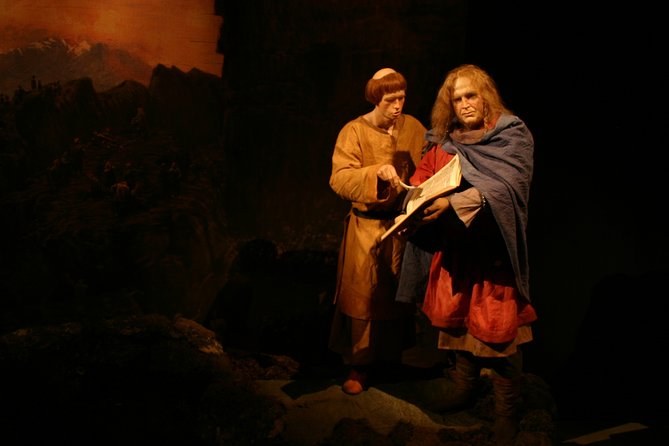
Leif Eiriksson is one of the best-known names in the museum. His story links Icelandic tradition to the wider Viking world and to Norse exploration across the North Atlantic. Seeing him presented as part of a larger story helps place Iceland within the wider movement of people across the region.
Snorri Sturlusson offers a different connection. He is associated with Icelandic literature and the preservation of stories that still shape how the Viking Age is understood. The museum gives you a chance to connect the famous sagas with the people who recorded and carried those traditions forward.
Ingolfur Arnarson represents the settlement story of Iceland. His presence helps frame Reykjavik and the island not simply as a place visited by seafarers, but as a home built through difficult decisions and long-term settlement.
The Black Death section broadens the visit beyond Vikings. The pandemic claimed an estimated 75 to 200 million lives, and its inclusion reminds you that Iceland’s story was affected by major events elsewhere in Europe. The museum is at its best when it shows these connections instead of treating Iceland as an isolated world.
How long to allow at the old harbour
The museum is open daily from 10:00 a.m. to 5:00 p.m. It is located in Reykjavik’s old harbour area, making it easy to pair with other stops in the city. Public transportation is nearby, and free parking is included, which is useful if you are driving.
For a quick visit, allow 45 minutes. That gives you time to take the audio guide, move through the main displays, and spend a few minutes with the Viking clothing and weapons.
Plan on one to two hours if you listen to every section, take photos, read the booklet, and have children who want to linger. The museum’s small size is an advantage when your schedule is crowded. You can fit it into a morning or afternoon without giving up half a day.
The set opening hours make planning straightforward, but you should still check the current schedule close to your visit. The supplied operating period lists daily opening from 10:00 a.m. to 5:00 p.m. through January 8, 2027.
Is $32 a fair price?
At $32 per person, admission is not cheap for a museum that many people complete in less than an hour. The value depends on how much you want this particular kind of presentation.
I think the price makes more sense if you use the audio guide fully, take time with the figures, and include the dress-up activity. It also covers taxes, fees, and handling charges, with free parking included. Children under six enter free, which improves the value for families with young children.
The price is harder to justify if you only want a quick look at the figures and skip the audio. In that case, you may feel that the visit is brief for the cost. You are paying for a focused story experience, not a large museum collection.
The museum earns its place in a Reykjavik plan because it provides context that outdoor sightseeing alone cannot. Waterfalls, lava fields, and hot pools show you Iceland today. The Saga Museum explains some of the people and stories that helped shape the country’s identity.
Who will enjoy this museum most?
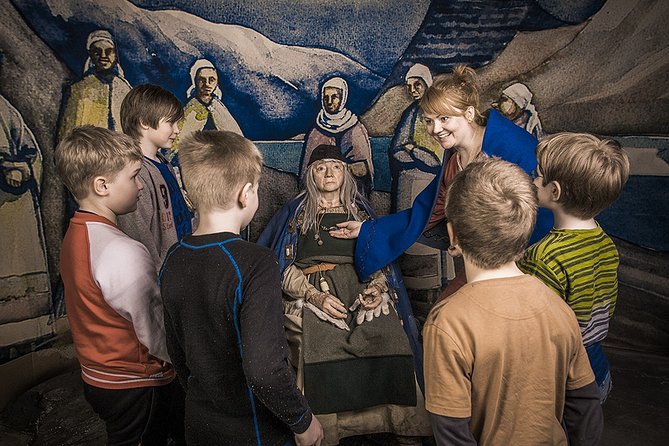
I would recommend it most strongly to families, first-time visitors to Iceland, and anyone curious about Viking history but not eager to read a long academic display. The audio makes the information manageable, while the realistic scenes keep the visit visual.
It also suits you if you have a spare hour near the harbour. You do not need to commit to a guided excursion or arrange transportation to a distant site. The museum is a contained, weather-proof stop in the city.
History fans may enjoy the presentation but wish for more original objects, deeper explanation, or modern technology. The museum gives you an overview rather than a detailed study. If you already know the Icelandic sagas well, you may find the content familiar.
For children, I would use the figures and dress-up area as the hook. The audio guide can supply the adult-level context, while the displays provide enough visual interest to keep the visit from becoming a lecture.
Practical booking advice
The ticket is mobile, and confirmation is provided when you book. You can cancel for a full refund up to 24 hours before the scheduled start time. Cancellations or changes made less than 24 hours before the start are not refunded or accepted.
The maximum group size is listed as 50 people, though the visit itself is self-guided. Most people can participate, and the museum is near public transportation. Transportation to and from the museum is not included, so you will need to make your own way there.
I would visit earlier in the day if you want the calmest possible pace, especially if you plan to listen to every audio section. A quieter visit gives you more time to examine the facial details and let children try the Viking gear without feeling rushed.
Should you book the Saga Museum?
Book it if you want a short, visual introduction to Iceland’s Viking-era stories, especially if you are traveling with children. The lifelike figures, flexible audio guide, and dress-up area give the museum more personality than a standard display of written panels.
Skip it if you are looking for a large collection of archaeological artifacts, advanced digital exhibits, or a full-day museum visit. At $32, you should plan to use the audio guide and allow enough time to make the admission worthwhile.
For most first visits to Reykjavik, I see the Saga Museum as a useful one-hour stop rather than a major destination. It gives you names, scenes, and stories to carry with you as you see the rest of Iceland.
FAQ
Where is the Saga Museum located?
The Saga Museum is in Reykjavik’s old harbour area.
What are the opening hours?
It is open every day from 10:00 a.m. to 5:00 p.m.
How long does a visit take?
The visit is described as taking about one to two hours. Many people can tour the displays in roughly 30 to 45 minutes, depending on how closely they follow the audio and how long they spend with each scene.
Is an audio guide included?
Yes. Admission includes access to an audio guide.
Which languages are available for the audio guide?
The audio guide is available in Icelandic, English, French, German, Russian, Spanish, and Swedish.
Can I use a booklet instead of an audio device?
Yes. An audio guide booklet can be purchased at the front desk.
Does the museum offer Viking costumes?
Yes. You can dress up as a Viking and try Viking weapons and armor.
Is the museum suitable for children?
Most people can participate, and the dress-up section makes it family-friendly. Some younger children may find the lifelike figures frightening at first.
Is parking available?
Free parking is included. The museum is also near public transportation.
Are children under six charged admission?
No. Children under six receive free admission.
Can I cancel my booking?
Yes. You can cancel up to 24 hours before the experience starts for a full refund. Cancellations or changes made less than 24 hours before the start are not refunded or accepted.
Just added around Reykjavik
- Northern Lights Private Tour from Reykjavik★ 5.0 · 3 reviews
- Private South Coast Tour: A Journey to Iceland’s Stunning Shore★ 4.5 · 3 reviews
- Golden Circle Private Tour Tomato Soup Lunch and Secret Lagoon with Photography★ 5.0 · 3 reviews
- Hot and cold G spots challenge★ 5.0 · 3 reviews
- Personalised Travel Plan and itinerary for Iceland★ 4.5 · 3 reviews
- Authentic Reykjavik Food Tour with Flea Market Delights★ 4.2 · 3 reviews
- Blue lagoon Premium and Private Golden circle tour★ 5.0 · 3 reviews
- Exclusive Westman Islands Adventure – A Private Day Tour★ 5.0 · 3 reviews
Reykjavik Tours, compared.

Golden Circle Full-Day Tour with Kerid Crater
Read our review →
Reykjavik Food Walk – Local Foodie Adventure in Iceland
Read our review →

South Coast Waterfalls, Black Sand & Glacier Tour
Read our review →

Sky Lagoon Entrance Pass With 7-Step Spa Ritual
Read our review →
Iceland South Coast Full Day Small-Group Tour from Reykjavik
Read our review →Browse the lists this tour appears in